How is an independent film made? In five phases: development, pre-production, production, post-production and distribution. Your first decision is which role you hold, because the role decides which phases you will mostly work in.
If you are unsure whether you sit on the creative or the organising side, start with director vs producer. Crew guides such as NuPitch’s who’s-who of film crew positions describe the director as responsible for translating the script into a visual narrative. The same guide says producers secure funding, manage budgets and coordinate schedules. The rest of this guide follows a film through its phases and shows where performers and small production teams fit.
What makes a film independent
An independent film is defined by control rather than by size. Film D’s beginner guide describes indie films as films whose substance, voice and style are more directly within the creator’s control. It adds that any movie, short or feature-length, not produced by a large studio or production company can be considered independent.
That definition matters for small teams. A short made by a handful of friends and a feature with a few million pounds behind it can both be independent, so the process below applies to both. The difference is how many people you can afford to hire and how long each phase takes.
The same guide gives one example of scale: The Blair Witch Project (1999) had a budget of approximately £50,000. Treat that as an illustration of what micro-budget means, not a target. Your own budget should come from what your script needs, covered later in the pre-production section.
Students planning a first shoot can start from Short Film Ideas For Students: 30 Quick, Low-Budget Concepts To Shoot This Semester (2026), which suits projects with very small crews. With the definition settled, the next step is to work out where you should enter the process.
Criteria for choosing your starting point
Five criteria decide where you begin. Work through them in order, because the earlier ones limit the later ones.
- Your role. A writer starts at development, a producer starts by securing funding, a performer is most visible during casting, and a crew member is hired shortly before the shoot. Producers are the exception: one production-team guide says the film producer manages the entire lifecycle, from concept development and pre-production through post-production and distribution.
- Your time horizon. Indie Film Hustle’s five-stage breakdown says development can take months or even years, and that pre-production can last many months from greenlight to cameras rolling. If you need a finished film soon, choose a project whose script and funding are already settled.
- Your budget. Film D lists the main cost drivers as cast and crew, equipment, locations, permits and post-production. A script with many locations and a large cast will cost more in those areas than a contained story, so match the script to the money before you cast anyone.
- Your crew size. Film D advises working out which roles are most important to your production and focusing your onboarding there. On a small team this means hiring the roles the story cannot work without, not trying to mirror a large set.
- Your union exposure. Indie Film Hustle notes that a producer may need to negotiate with the actors’ union to obtain union membership for cast and crew. If anyone attached to your project is a union member, settle this early, before offers go out.
Which path suits you
- If you are a writer, begin with How To Write A Screenplay: A Clear 8-Step Roadmap For 2026 and make sure the script is finished before you chase funding.
- If you are a performer, go to the casting section below and prepare a résumé and headshot, since casting directors review these before screen tests or auditions.
- If you want to work on crews, read How To Start As A Film Production Assistant: A Practical Guide For 2026, then the crew section of this guide to learn the departments you could grow into.
- If you are organising a small shoot, read pre-production first, because that is where budget, casting and location scouting all land.
- If you want to direct, read the production section, then the role comparison linked at the top.
Development: from idea to green light
Development is the phase in which a project gets approved or funded. Indie Film Hustle says it can take months or even years to get a project green-lit by a studio or funded independently. For an independent team the second route is the usual one, which makes funding, not the script alone, the deciding task of this phase.
Settle two things before you move on. First, lock the script. A shooting plan built on a draft that keeps changing will keep changing too. Writers who are new to the form can read What Is a Screenplay? The Essential Guide for Writers and Movie Fans (2026) for what the document is for, and Screenplay Format Example: A Simple, Ready-To-Use Guide For Writers (2026) for a layout to copy. If your story relies on a time-passing sequence, How To Write A Montage In A Screenplay: Clear Rules, Examples, And Formatting Tips (2026) shows how to write it so a crew can plan it.
Second, decide how the project will be funded. A film paid for independently can start sooner than one waiting on a studio, but then every pound must stretch across all five phases. Once funding is in place, the film moves into pre-production, where most of the planning decisions are made.
Pre-production: casting, budget and crew
Pre-production covers all the steps taken before the actual shoot. Indie Film Hustle names casting, budgeting and location scouting among them, and notes the phase can last many months from greenlight to the day cameras roll. It is the phase where small teams save or lose the most money, since mistakes here are cheaper to fix than the same mistakes on set.
How actors get cast
Casting is the process of finding actors who fit the roles in the script. Indie Film Hustle describes the first filter: casting directors review résumés and headshots of potential actors before screen tests or auditions. For a performer, that makes the résumé and headshot the first thing a casting director will judge, and they need to be ready before any audition notice appears.
On a small production the person doing the casting may also be the producer or director rather than a dedicated casting director, but the sequence is the same: review materials, then audition or screen test, then choose. If you are a filmmaker, write the role descriptions from the script and judge applicants against those, not against who is easiest to book.
Pay on micro-budget films can be modest. Film D gives an example of a day-rate deal of just £100 per day for a micro-budget film. Treat that as an illustration of how a micro-budget offer can look, and ask what a deal covers before you accept it. As a filmmaker, quote the day rate and the number of shoot days together so a performer can see the full commitment.
Budgeting
Indie Film Hustle says the budget is broken into three key areas: production, post-production and distribution. The practical lesson is that spending everything on the shoot leaves nothing for editing, sound mixing or getting the film seen. Build the budget across all three areas first, then see what remains for the shoot.
Use Film D’s list of cost drivers (cast and crew, equipment, locations, permits and post-production) as a checklist when you read your script. A scene in a location that needs a permit, or a role that needs a specialist, shows up as a cost line before you ever reach set.
Hiring the crew
The crew grows late. Indie Film Hustle says many crew members are employed about two to eight weeks before the shoot starts. That timing means a producer can spend months on script, money and cast with a small core team, then hire departments only when the dates are firm.
For small teams, Film D’s advice is the working rule: work out which roles are most important to your production and put your onboarding effort there first. A story that depends on low light needs lighting and camera people early. A dialogue-driven story needs the person who records sound just as early.
Guild and union basics
Indie Film Hustle flags that a producer may have to take up union membership for the cast and crew with the actors’ union. The terms of that negotiation depend on the union and the production, so the sensible step for a small team is to contact the relevant union directly before making offers to members, and to put what you agree into the contracts you issue.
Performers who are not yet members should read this as a reason to ask early whether a production is working with a union, because it changes how and when you are engaged.
Production: the shoot
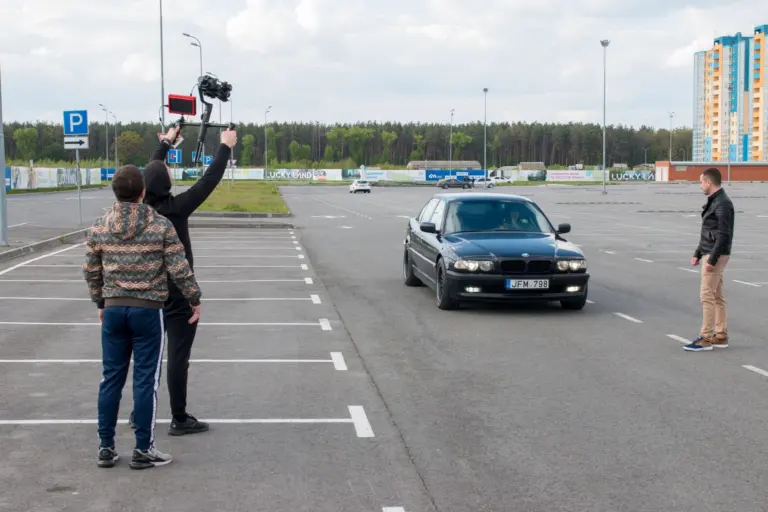
Production is the phase in which the planned script becomes recorded footage. By this point the cast is signed, the locations are chosen and the crew has been hired. The director’s job, in NuPitch’s words, is translating the script into a visual narrative, and the same guide describes the director as often seen as the captain of the ship.
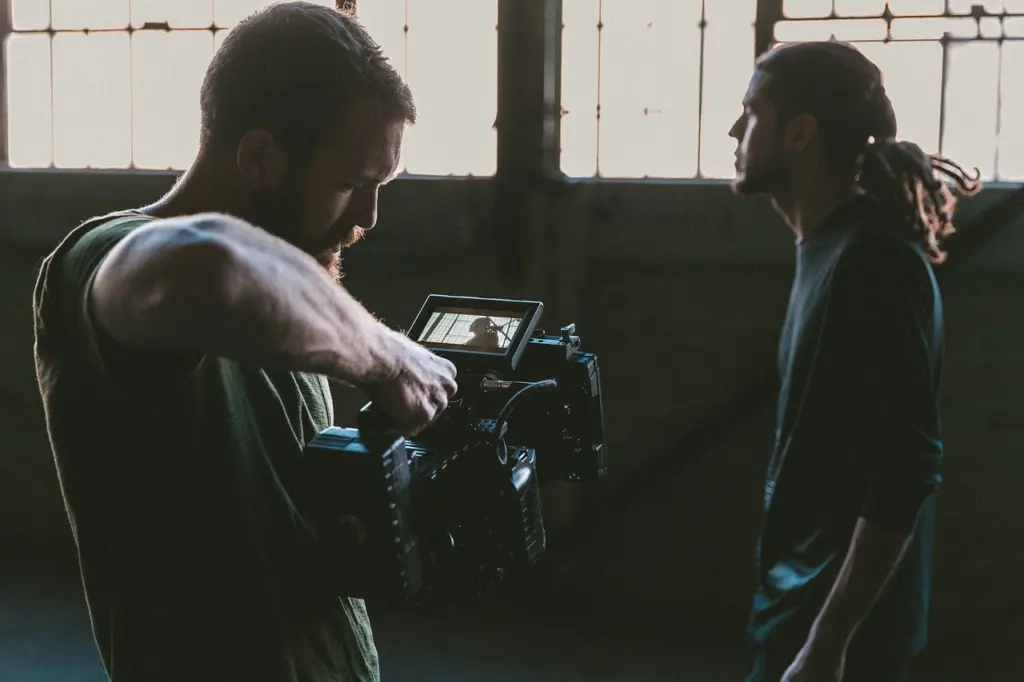
On set, the director works through the camera department. Film D explains that the cinematographer is also known as the director of photography, or DP. For a director who wants to understand that partnership, What Is Cinematography? The Essential Guide To Visual Storytelling (2026) explains the craft, and Videography vs Cinematography: A Clear Guide To Their Differences And Which To Choose In 2026 helps small teams decide which approach suits their project.
Once you know what the camera department does, the choices in front of it become easier to plan:
- Shot selection. Mastering Film Shots: The Essential Types Every Filmmaker Should Know (2026 Guide) is the place to build a shot vocabulary before the director and DP plan coverage.
- Composition. Mastering The Rule Of Thirds In Cinematography: Simple Composition Tips For Stronger Shots (2026) gives a simple framing habit for teams without a dedicated camera specialist.
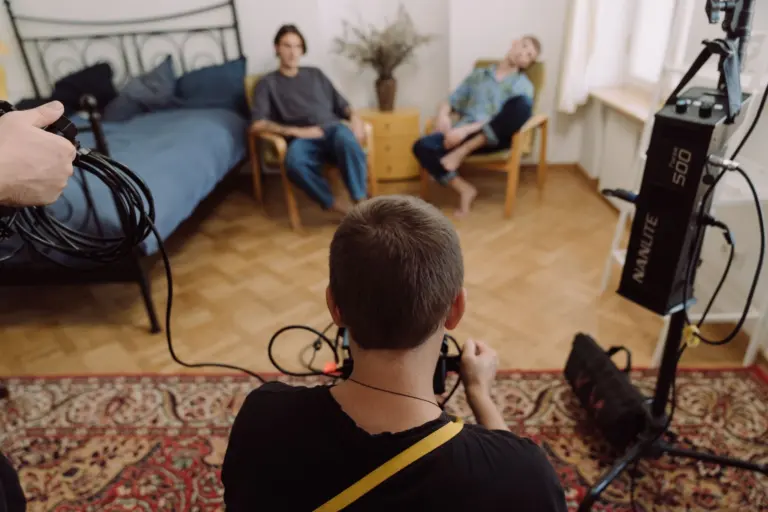
- Lighting. A three point lighting setup is a practical starting layout for small crews, and the NuPitch guide notes that gaffers handle lighting setups to create the desired mood and atmosphere.
- Look and movement. Color In Cinematography: How To Use Color To Shape Mood, Story, And Style (2026 Guide) covers colour choices, and How The Dolly Zoom Creates Cinematic Tension: A Practical 2026 Guide covers a single camera move that is worth planning in advance.
Keeping all of this on schedule is its own job, and the next section shows who carries it. Since the shoot is also where the budget is spent fastest, anything you can decide in pre-production is cheaper to decide there.
Crew roles on a film or TV set
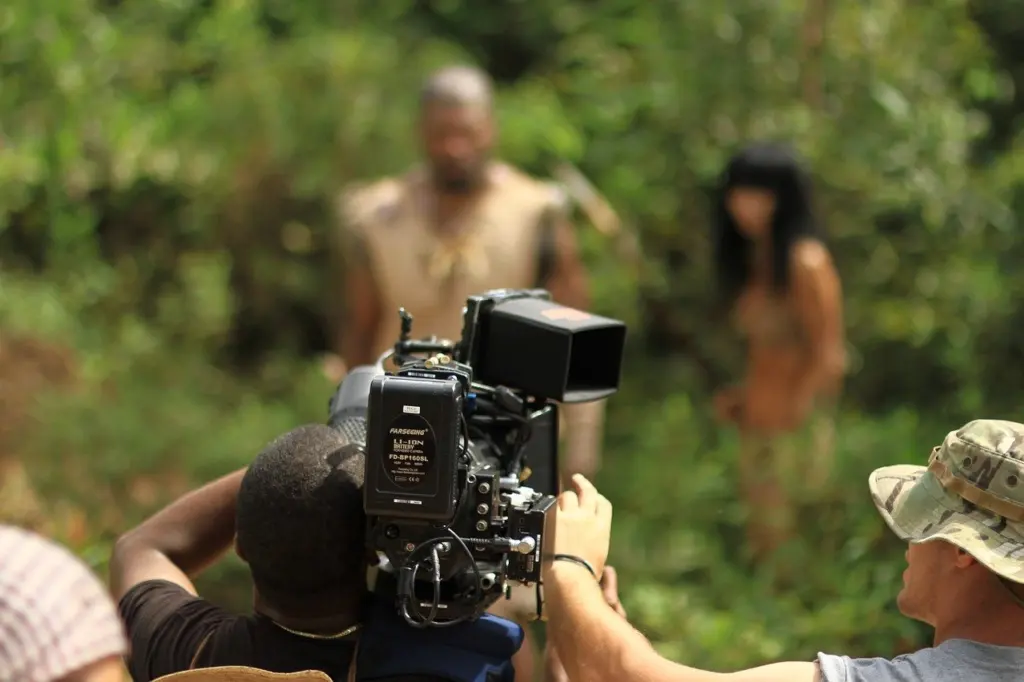
A crew is a set of departments, each with a distinct job. The guides below describe film sets, and the same role names are a useful starting vocabulary for any set, TV included. NuPitch lists the key roles in film production as the director, producer, screenwriter, cinematographer and editor, and then describes the technical specialists around them.
- Screenwriter. Writes the script that every other department works from, which is why the script has to be settled before pre-production spending begins.
- Director. Translates the script into a visual narrative. The production-team guide from Saraswati Halawi adds that directors often have a say in casting, post-production style and even marketing materials.
- Producer. Secures funding, manages budgets and coordinates schedules, according to NuPitch, and manages the whole lifecycle of the film from development through distribution, according to the production-team guide. The split between this role and the director is the subject of director vs producer.
- Cinematographer (DP). Leads the camera and image side of the shoot. See the cinematography pages above for what that involves.
- Grip. NuPitch says grips are responsible for setting up and maintaining the equipment that supports cameras.
- Gaffer. Handles lighting setups to create the desired mood and atmosphere.
- Sound mixer. Works to ensure audio levels are balanced.
- Editor. Assembles footage into a coherent narrative, which makes this role the bridge between the shoot and the finished film.
If you are curious about the design side of a set, what does a production designer do explains how the art department divides design, props and costume.
For a small team, the useful question is not who is on the list but who you can double up. A director who also produces carries two jobs that pull in different directions: one is protecting the creative vision, the other is protecting the budget and schedule. Keep those roles separate if you can afford a second person for them. Once the footage is recorded, the editor and the sound team take over.
Post-production and distribution
Post-production is where, in Film D’s words, all of the editing and sound mixing will occur. The editor assembles the footage into a coherent narrative, and the sound mixer’s work on audio levels carries through into this phase. For a small team, a clear plan for who edits, and on what schedule, belongs in the budget from the beginning, since post-production is one of the three budget areas Indie Film Hustle identifies.
Distribution is the last phase and the third budget area. It is easy to treat it as an afterthought, but it is a named part of both the five-phase structure and the budget. A producer who has funded the shoot and post-production but nothing for distribution has a finished film with no planned route to an audience. The producer’s role runs through to this point, so this is also the phase where the producer’s attention returns after the shoot.
The phases at a glance
The table below turns the phases into planning decisions. Use it as a checklist before you commit money to the next phase.
| Phase | What happens | Planning use |
|---|---|---|
| Development | The project is green-lit by a studio or funded independently; can take months or even years | Lock the script and a funding route before you commit to crew or dates |
| Pre-production | Casting, budgeting and location scouting; many months from greenlight to cameras rolling; many crew hired about two to eight weeks before the shoot | Spend planning effort here, and hire the most important roles first |
| Production | The shoot, with cast, crew, equipment, locations and permits all affecting cost | Keep the schedule tight, since cast and crew cost is a main budget driver |
| Post-production | Editing and sound mixing | Fund and schedule an editor and sound work before the shoot ends |
| Distribution | The film is released; one of the three budget areas | Reserve money and time for it, not just the shoot |
The phase structure and budget areas come from Indie Film Hustle, and the post-production and cost-driver details from Film D.
Frequently asked questions
What happens once an actor has been cast?
The actor is required to sign a contract with the producer, according to Indie Film Hustle. Read the contract before you sign it, and check that the day rate and the number of shoot days are both stated.
Who keeps a shoot on schedule?
The first assistant director is described by the production-team guide as crucial to keeping production on schedule, and the line producer handles all day-to-day production logistics. The producer also coordinates schedules at a higher level.
What counts as a low budget for an independent film?
Film D says the term low-budget can refer to anything from micro-budget films to much larger productions, so the label alone says little about what a project can afford. Always plan from your own script and your own funding.
Does a director have a say beyond the shoot?
Often, yes. The production-team guide says directors often have a say in casting, post-production style and even marketing materials. The extent depends on the production and on what has been agreed with the producer.