A performer asks, “what is cinematography, and is that just whoever holds the camera?” No: cinematography is the craft of telling a story through images, and the cinematographer shapes camera, lens and light in step with the director.
Film schools describe it as a creative and interpretative process that ends in an original work of art. For performers and small teams, the useful question is who makes which visual decision, and when.
Cinematography is more than photography
Cinematography is not a subcategory of photography. Photography is one craft among several that the cinematographer uses, alongside lighting, lenses, camera movement and crew coordination. The related idea of cinematography techniques, in StudioBinder’s wording, covers the visual methods filmmakers use to tell a story through images. Three common assumptions show where people go wrong.
| Common assumption | What cinematography involves | Planning use |
|---|---|---|
| It is photography with a moving camera | Photography is only one craft the cinematographer draws on | Expect visual decisions about light, lenses, movement and crew, not only the frame |
| Its job is to make footage look professional | The real job is to make the visuals serve the story | Judge a setup by what the scene needs, not by how polished it looks |
| It starts when the camera rolls | The work runs from conception and preproduction through postproduction | Raise visual questions before the shoot day, not on it |
The definitions and the preproduction-to-postproduction span come from Terre di Cinema, and the story-first point comes from Format magazine.
What a cinematographer does
A cinematographer is responsible for the look of a movie. That means framing and creating effective shots, which calls for a good artistic eye. Format goes further and argues that cinematographers are as much storytellers as directors, directing the visuals rather than the actors.
Working with the director
The cinematographer develops an artistic vision for the film together with the director, then produces it. In practice the director owns the story and the performances, while the cinematographer turns that intent into images. A performer who understands this split knows where to take a question: how a scene feels on screen is a conversation between those two people.
Camera department roles
The cinematographer, also called the director of photography, leads the visual crew rather than working alone. The role includes managing a budget and a crew covering camera, grip and lighting, and coordinating with other departments. The roles below are the ones performers and small teams meet most often.
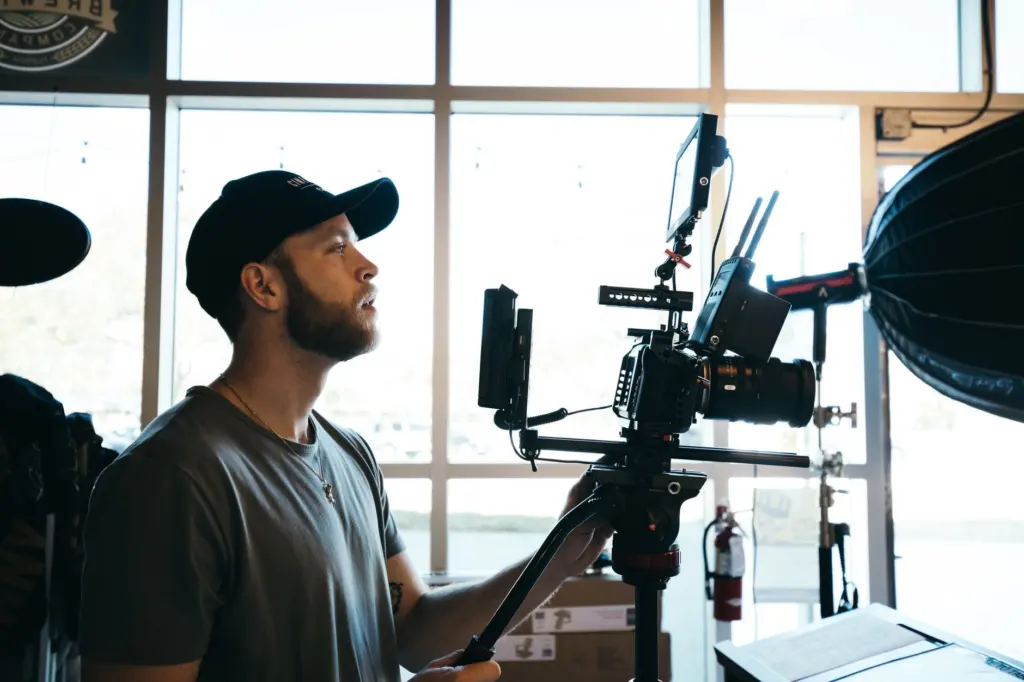
- Cinematographer or director of photography: sets the visual approach and answers for the finished look. StudioBinder’s techniques guide stresses the director of photography’s intention and workflow over expensive equipment.
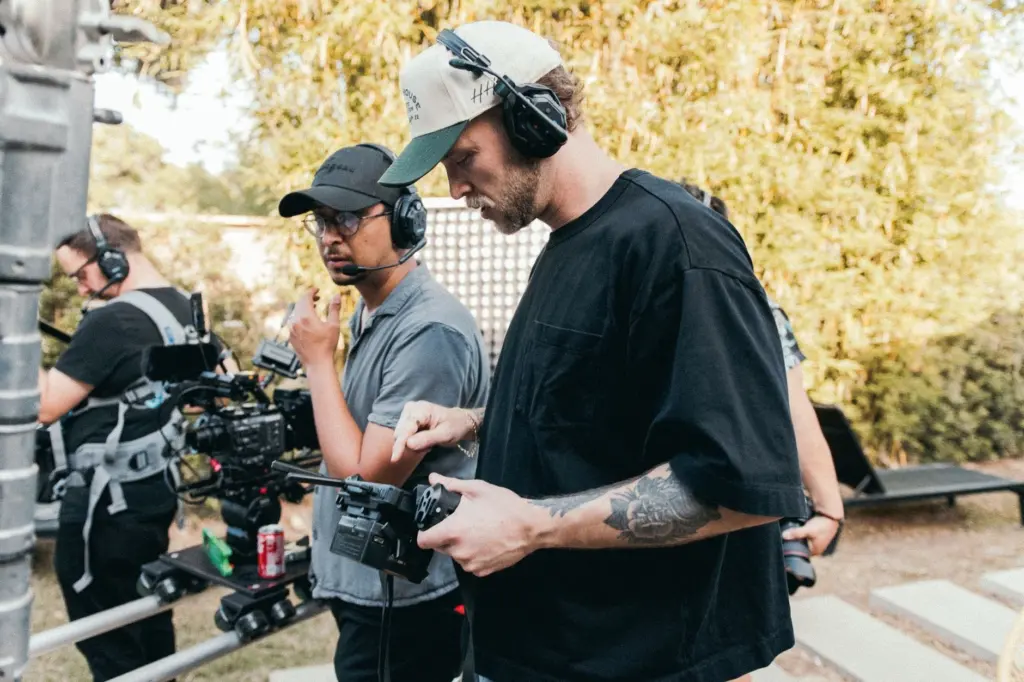
- Camera operator: handles the camera itself, whether it sits on a dolly or crane or is held by hand. Choosing where it goes and how it moves stays with the cinematographer’s plan.
- Gaffer: works on the lighting side of the crew, helping the cinematographer realise the lighting plan on set.
- Digital imaging technician: oversees the in-camera technical specifications that carry out the cinematographer’s vision, as Format explains.
On a very small shoot one person may cover several of these jobs. The tasks stay distinct even when the titles merge, so name who is responsible for each before the day starts.
Light, lenses and the key visual elements
Light is the element that matters most. Format calls it the main filmmaking tool that distinguishes raw home video from professional filmmaking, and says cinematographers must understand and modulate camera movement, camera placement, composition, focus and, most importantly, lighting.
- Lighting: a narrative tool, not only a way to make a subject visible. Terre di Cinema lists making lighting work as a narrative tool among the core skills. A three point lighting setup is a practical starting point for small teams.
- Lens: lenses and formats shape how the scene is seen, so the cinematographer chooses them deliberately.
- Camera placement and composition: where the camera sits and how the frame is arranged decide what the audience notices first.
- Focus: directs attention within the frame.
- Mise en scène: the arrangement of everything in front of the camera, which the cinematographer and other departments shape together.
Camera movement and shot design
Movement is a choice about what the audience sees and when. Cinematographers use dollies and cranes, hand-held cameras, and, on smaller productions, sliders and camera stabilizers to move around subjects or reveal something in shot.
- Tracking shot: the camera moves to follow a moving subject, as StudioBinder defines it.
- Crane shot: the camera is mounted on a crane to reach angles and motion that are otherwise difficult.
These are two entries in a much longer vocabulary. The guide to Mastering Film Shots: The Essential Types Every Filmmaker Should Know (2026 Guide) covers framing choices that a performer will hear called out on set.
Formats and camera types
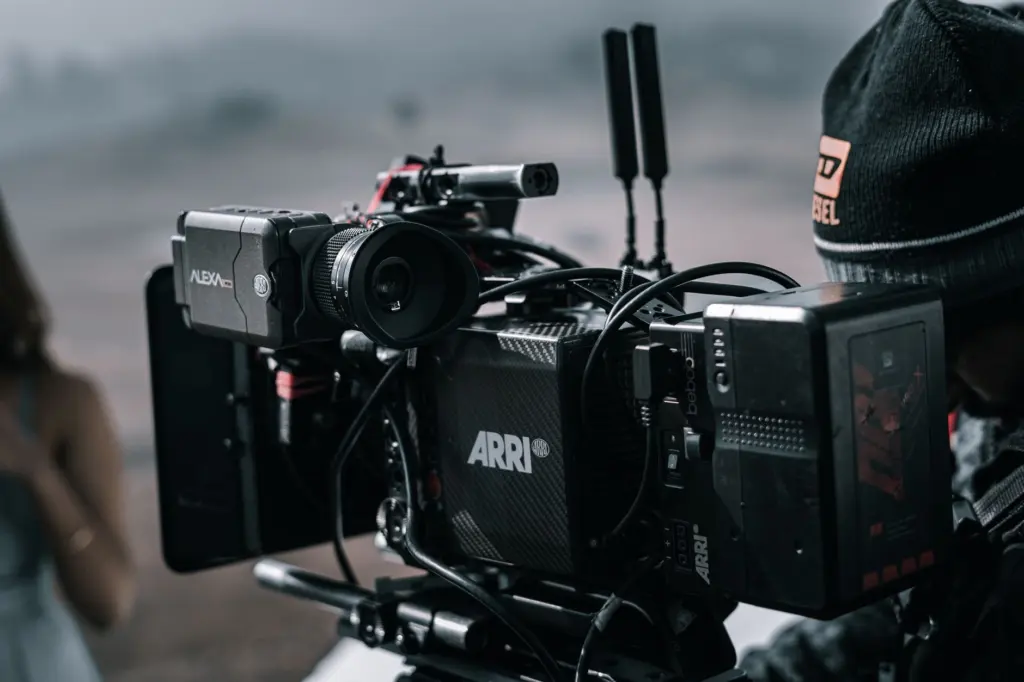
Cinematographers work with film or digital cameras and choose lenses and formats to suit the project. The camera does not have to be a dedicated cinema rig. Format describes the film Tangerine, where an iPhone with an anamorphic adaptor captured a 30 per cent wider image than usual (2.4:1 instead of 16:9). The lesson for small teams is that format and lens choices can stretch modest equipment, provided they are planned.
Cinematography versus videography
Cinematography and videography overlap, and the line has blurred. As Thomas W Photo notes, retail cameras are improving rapidly, so equipment no longer separates the two. A cinematographer may do many of the same jobs as a videographer, but the process starts from a different philosophy, with more creative freedom over the look.
The practical difference is intent. Videography often records an event as it happens. Cinematography designs the image in advance so that it serves the story, and light does much of that work.
Where cinematography fits in production
Cinematography runs through the whole project: conception and preproduction, the shoot, and postproduction. Before the shoot the cinematographer agrees the visual approach with the director. During it, the camera, grip and lighting crews carry out that plan. Afterwards the cinematographer’s choices still matter as the images are finished. To see where these stages sit in the wider process, read about how is an independent film made.
For a performer or a small team, the sensible habit is to talk about look, light and camera movement during preproduction. Changing them on the day costs the crew time.
Frequently asked questions
| Question | Answer |
|---|---|
| Does cinematography require expensive equipment? | No. StudioBinder’s techniques guide focuses on director of photography intention and workflow rather than expensive gear. |
| Which organisation is seen as an authority on cinematography? | The American Society of Cinematographers, a guild that is seen as the authority on accomplishments in the cinematographic arts. |
| What format does a finished cinema film go out in? | The final print and/or the DCP (digital cinema projection format), prepared by working with a film house. |
| Is photography skill enough to become a cinematographer? | It helps, since framing effective shots needs a good eye, but the role also requires lighting, lenses, crew and budget management. |