| Framing decision | What it changes on screen | Planning use |
|---|---|---|
| Eye on an upper intersection point | Gives a portrait a clear focal point instead of a centred stare | Choose the left or right eye per shot, then set headroom around it |
| Close-up eyes on the top horizontal line | Creates a lifelike, connecting gaze | Fix the eye line first and adjust the rest of the face to it |
| Horizon on the upper or lower third | Keeps the horizon off the middle of the frame | Decide whether land or sky is the subject before you place it |
| Moving subject on a third with space ahead | Leaves breathing room in the direction of movement | Plan lead room before blocking the move |
| Main subject outside the centre box | Avoids weakening the balance of the frame | Treat centring as a deliberate choice, not a default |
These placements follow guidance from New York Film Academy-style composition notes at NFI and the film-focused breakdown at Writeseen.
Rule of thirds cinematography places key subjects on the lines or intersections of a frame split into thirds, not dead centre. It is a guideline: follow it when it clarifies the shot, break it when symmetry matters most.
Framing is one decision in a larger workflow, and the hub on how is an independent film made places composition in that wider context.
What thirds framing changes in a shot
Thirds framing changes where the viewer’s eye lands first and how much room the subject has to look or move. Those effects are the reason to use the grid, so decide what you want the audience to notice before you touch the camera.
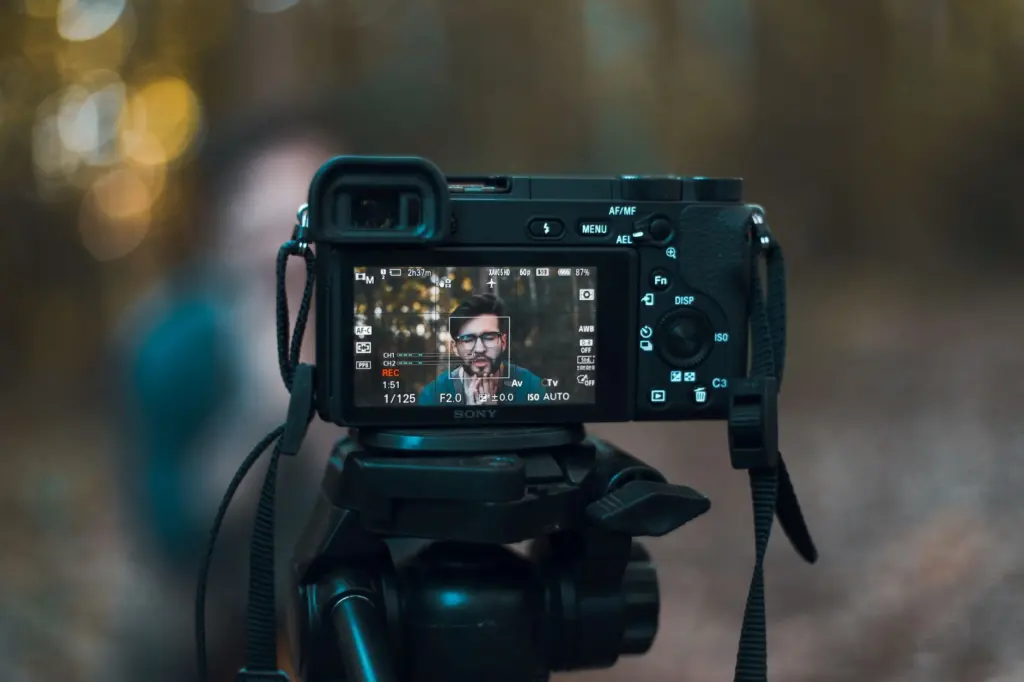
- Faces gain a natural anchor. NFI notes that the human eye gravitates toward points just beyond the centre of a photo, which is why an eye on an upper intersection tends to read more naturally than a face dropped in the middle.
- Balance improves. NFI advises against keeping the main subject in the centre box, and Desktop Documentaries makes the same point: putting the main object in the middle may feel like common sense, yet it usually does not work best.
- Space becomes meaningful. When the subject sits on one third, the remaining frame becomes deliberate negative space rather than leftover background.
- Speed of setup improves. Writeseen describes the grid as a fast track to dynamic images for filmmakers and cinematographers, because it gives a repeatable starting point for composition.
The practical consequence is that you can make a quick, defensible framing decision under time pressure, then refine it. For examples by shot type, read on.
Framing examples by shot type
Each shot type uses the grid differently, so match the placement to what the shot is meant to show. The categories below pair naturally with the shot vocabulary in Mastering Film Shots: The Essential Types Every Filmmaker Should Know (2026 Guide).
Close-ups and portraits
For portraits, NFI recommends aligning the subject’s left or right eye with one of the upper two intersection points. For close-ups, Writeseen suggests keeping the eyes on the top horizontal line for a lifelike, connecting gaze. Both approaches put the eyes high in the frame, so treat headroom as the thing that adjusts: what is left above the head follows from where the eyes sit.
Landscapes and wide exteriors
NFI advises putting the horizon on the upper or lower third for landscape images. Clideo’s video guidance says the horizon should match either the top or bottom line, and that a horizon on the bottom line emphasises the sky. The judgement call is simple: give the larger share of the frame to whatever carries the story, whether that is weather, terrain or a distant figure.
Vertical and side-placed subjects
Writeseen suggests placing a subject along an upper or side third for strong headroom and dynamic energy in vertical video. This suits phone-first content, where the tall frame leaves little room for error and a side third keeps the subject from sitting stiffly in the middle.
Moving subjects
Photouno advises leaving empty space on the side the subject is moving toward, and Writeseen adds that the subject should sit on one third with breathing space in the direction of movement. This is lead room. A walking or running figure with nothing ahead of them feels boxed in, so frame them back on a third and give the path space.
Camera movement and on-set checks
Camera movement turns a fixed composition into a changing one, so plan the starting frame and the ending frame as separate thirds compositions. When the camera follows a subject, the same lead-room logic applies throughout the move: the empty space should stay on the side the subject is heading toward.
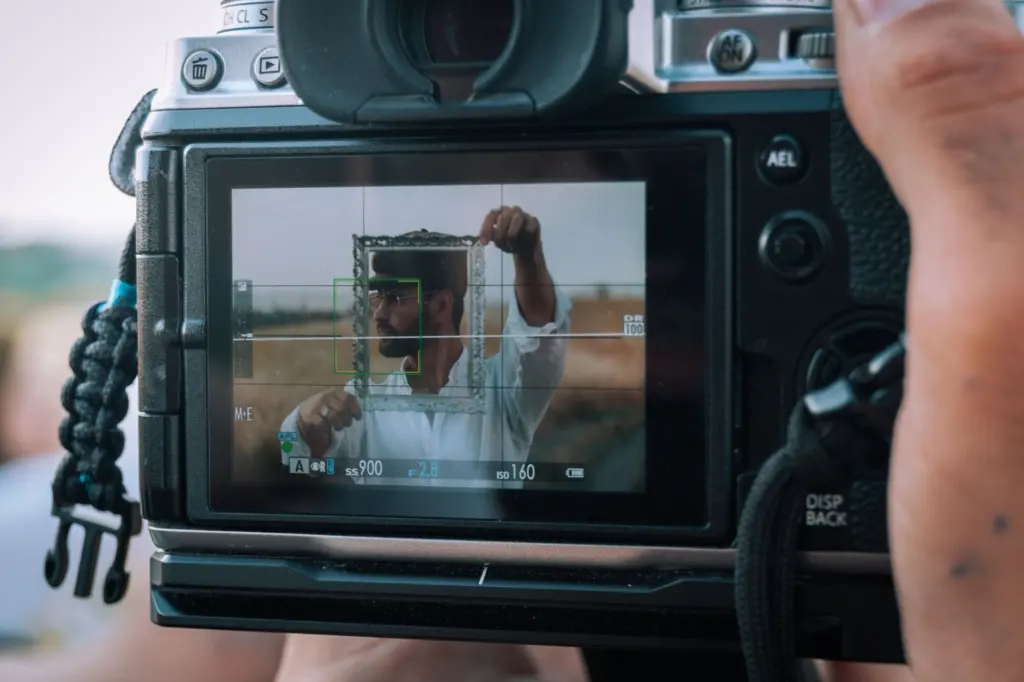
Planning use depends on how you work. If your camera has a grid overlay, switch it on at the monitor and check the first and last frames of each move. If it does not, the grid has to be held in your head while you compose, so rehearse the move and check where the subject lands at each end.
Crew who are starting out, for example by following the route in How To Start As A Film Production Assistant: A Practical Guide For 2026, can learn a lot by watching how the operator frames and rechecks shots on the monitor.
How the grid works
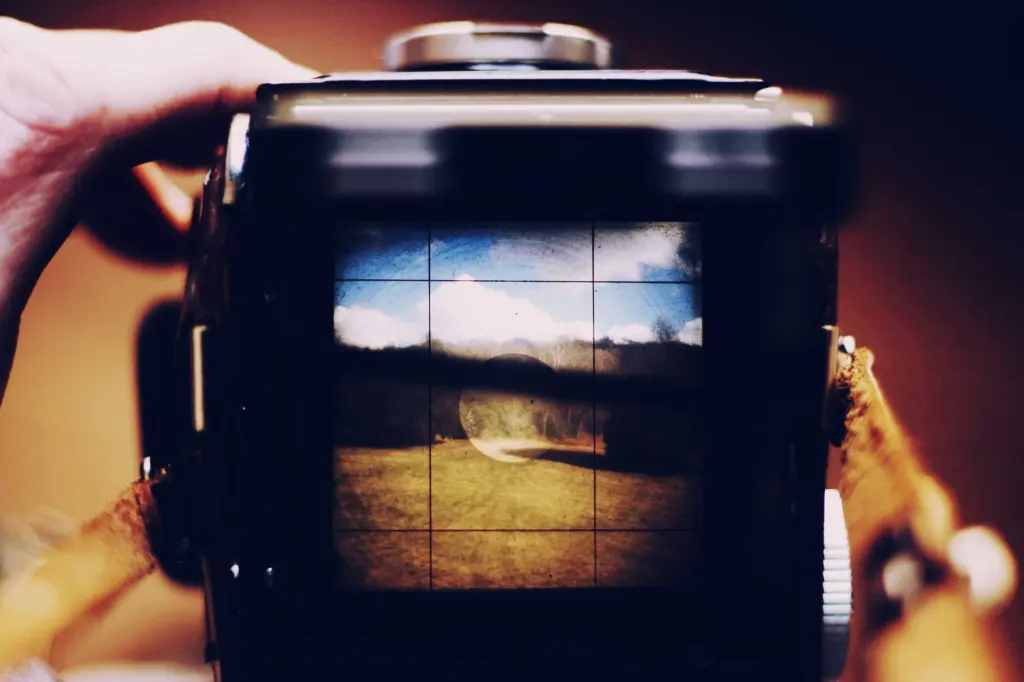
The grid is a frame divided evenly into thirds horizontally and vertically, forming a 3×3 grid, according to NFI. Clideo describes the same thing in video terms: two vertical and two horizontal lines divide the frame into nine equal blocks.
The lines are not the only useful part. NFI points out that there are four points of interest at the intersecting points, and those are where the strongest placements sit. Desktop Documentaries stresses that the imaginary lines are a guide when framing a shot, and that the basic rules of photography apply when shooting video for documentaries.
The idea predates cinema. NFI says the rule was first discussed in 1797, and Writeseen credits John Thomas Smith with promoting it that year, building on artists’ search for pleasing, balanced visuals. A composition tool that has lasted that long is worth treating as a default, as long as you know the exceptions.
When to break the rule
Break the rule when symmetry or balance is the point of the shot. Photouno names this as the most common exception: situations where symmetry or balance is a crucial element of the composition.
- Choose centring for formal, symmetrical subjects. A corridor, a doorway or a face-on portrait can gain from a centred frame, provided the centring is obviously intentional and the rest of the composition is tidy.
- Choose off-centre placement for tension. Writeseen cites Spielberg placing Chief Brody off-center to build suspense with negative space, which shows that offset framing can do narrative work as well as balance.
- Stay with thirds when the shot just needs to read clearly. If there is no story reason to depart from the grid, the grid is the safer choice.
Before you break the rule, name the effect you want. If you cannot say what a centred or unbalanced frame adds, the thirds placement is probably the better shot.
Common mistakes
- Centring out of habit. Desktop Documentaries notes that putting the main object in the middle may seem like common sense, but it usually does not work best. NFI gives the same warning about the centre box.
- Ignoring lead room. A moving subject placed on a third with no space ahead of them feels cramped, because the direction of travel has nowhere to go.
- Placing the horizon in the middle. Both NFI and Clideo put the horizon on an upper or lower line, so a midline horizon splits the frame without choosing a subject.
- Treating the grid as the whole of composition. The grid sets starting positions. Headroom, eye line and the space around the subject still need adjusting shot by shot.
Frequently asked questions
Is the rule of thirds a real rule?
Clideo calls it not a real rule but more a hint or a technique. Treat it as a reliable starting point that you override for a reason.
Does the rule of thirds apply to video as well as photography?
Yes. Desktop Documentaries says the basic rules of photography apply when shooting video for documentaries, and Clideo’s video guidance uses the same nine-block grid.
What if my camera has no grid overlay?
NFI says almost all digital cameras offer a rule of thirds grid overlay. Photouno notes that cameras without one require you to visualise the grid in your mind as you compose.
Which part of the frame draws the most attention?
NFI describes the bottom right portion of an image as the most visually arresting and the upper left as the most overlooked. Use this as a prompt when deciding where to place the element you want noticed.