A manager collects several quotes for the same corporate video and the totals are far apart. The right corporate video production company is the one whose scope, process and deliverables match a written brief, not the lowest price.
Before you contact anyone, settle scope with a video production checklist, because every quote depends on it. The sections below take the usual assumptions about corporate video pricing and vendors one at a time.
Write the brief before you request quotes
A common assumption is that the production company will work out what the video should achieve. Corporate video spans training, explainers, testimonials and event coverage, and each needs something different from a crew, so a vendor cannot price the work well without your direction.
Superside describes the starting point as an ultra-clear brief that outlines objectives, audience, tone, deliverables and timelines. It also advises setting specific business and marketing goals before you brainstorm video ideas. In practice, a brief you write yourself is what makes quotes comparable. A vendor who prices without asking about these points is pricing a guess, and the gap shows up later as change fees.
Why quotes for the same video differ
Quotes for the same corporate video can differ widely because each bidder prices time, style and risk in its own way. Several common assumptions make bids hard to compare, and the table sets each one against what the pricing guides say.
| Common assumption | What holds | Planning use |
|---|---|---|
| A shoot is billed only for time on camera | Setup time is billed with filming time; a 2-hour conference may need 2 hours of setup. | Ask for setup hours to be shown as their own line. |
| Script edits after recording are minor | Changes after the initial session require re-recording and additional fees. | Lock the script and the approvers before shoot day. |
| A half-day rate is always the cheaper option | Full-day rates generally offer better value per hour than half-day rates. | Compare cost per hour as well as the day total, especially if you have enough material to fill a full day. |
| Every video style costs about the same per minute | Vendor estimates: live action and animated $1,500+ to $10,000+ per minute; screencast $1,000+ to $4,000+ per minute. | Match the style to the goal; live action tends to need the most logistics. |
These figures and conditions come from Mediamill’s pricing explainer and Flearning Studio’s cost guide, both vendor-published, so read the dollar amounts as indicative estimates.
The practical result is to put the same questions to every bidder: which hours are billed including setup, which rate type applies, and what happens when the script changes.
Price bands by video type
Corporate video cost depends first on the type of video. Flearning Studio gives these vendor estimates, each ending in a plus sign:
- Training and onboarding video: $1,000 to $10,000+. Cost varies with length, modules and instructional design, so a short single-topic lesson and a multi-module course sit at opposite ends.
- Explainer and product demo: $2,000 to $20,000+ (vendor estimate). These are short-form videos that explain a product or service, and the wide spread reflects how much animation or live footage they involve.
- Corporate event coverage: $1,500 to $15,000+. This covers live events such as seminars, product launches or conferences.
- Testimonial and interview video: $1,000 to $15,000+. These feature clients, employees or executives sharing stories or opinions.
- Brand story and culture video: $5,000 to $15,000+. This type tells the company’s story or shows its values and culture, and its floor is the highest of the group.
Because every range is open-ended, use the upper figure as a signal that complex work can go higher, not as a cap. A quote far below the bottom of its band deserves a question about what has been left out. A quote far above it deserves a look at locations, versions and style.
Agency listings give a different angle. PlayPlay’s directory shows a Boston agency pricing training films at $5,000-$10,000 per project, another Boston agency offering marketing films from $1,500 per project, a Los Angeles agency quoting brand films at $25-$49 per hour, and a New York full-service agency starting at $10,000 per project. These are individual agency examples from one directory. They show that hourly rates and per-project minimums are different pricing models, so compare totals for the same scope rather than the headline unit.
Vendor evaluation checklist
A good vendor is judged on how it handles your brief, not on how polished its pitch is. Work through these checks with each shortlisted company:
- Brief fit. Ask the company to restate your objectives, audience, tone, deliverables and timelines in its proposal. If it cannot, the proposal is generic.
- Success measures. Agree how the video will be judged before recording starts. Superside’s advice to define success before you record applies equally to the vendor conversation.
- Stakeholder handling. Superside says the right partner brings expertise in enterprise-level workflows and knows how to manage multiple stakeholders. Name your approvers and ask how rounds of feedback are consolidated.
- Portfolio match. Ask for finished work of the same video type, such as an interview or a training module, rather than the most impressive reel piece.
- Itemized estimate. Mediamill notes that pre-production can include market research, scriptwriting and securing filming permits. Ask for these, the shoot time with setup, post-production and any re-recording fees to appear as separate lines.
- Positioning claims. Companies describe themselves in marketing terms. Zane Productions, for example, calls itself a director-led strategic creative partner that brings creative, strategy and production together, with teams in Los Angeles and New York City. A description like that is a prompt for questions: ask which part of your project the strategy work would cover, and look for it in the sample work.
- Price band check. Compare each quote with the bands in the previous section and ask about any large gap.
If two companies score equally, prefer the one that asked you the most pointed questions about audience and goals during the quote stage.
Locations, permits and rush timelines
Where and how fast you shoot can change a budget more than the video’s length. Flearning Studio states that multi-location shoots significantly increase production costs and complexity, adding travel, permits and logistics. Shooting outside your office may also require permits or location rentals, especially in public or high-traffic spaces, and rush jobs usually cost more.
The judgement call is whether every location earns its place. An interview and its supporting footage often work in one well-lit room. Ask the vendor to price a single-location version alongside the full concept so you can see what each extra location adds.
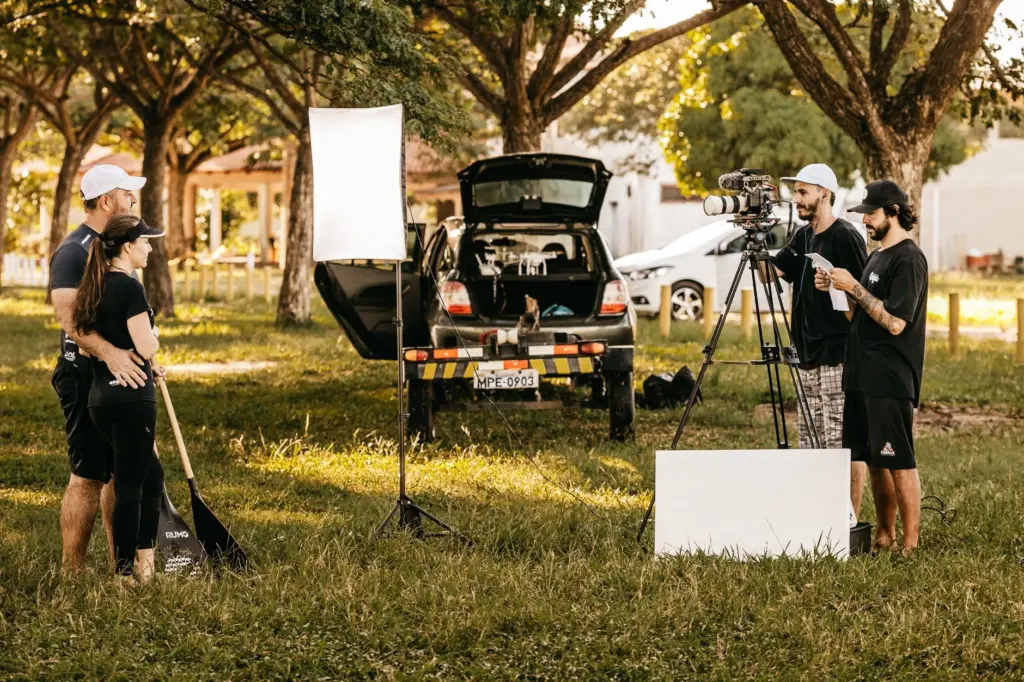
If the concept calls for virtual backgrounds instead of extra locations, the guide to How To Use A Green Screen: Easy Steps To Professional Backgrounds In 2026 explains the setup, which helps you judge what a vendor proposes. Leave schedule slack for approvals so that you are never paying rush rates for a delay on your side.
Deliverables to expect
The deliverables are whatever the brief and the contract name, which is why Superside lists them as a core brief element. Do not assume that a quote for a single hero video includes shorter versions, alternate cuts or social cutdowns.
- Name each file. List every video, length and version you need. Confirm whether captions, raw footage and alternate edits are included or priced separately.
- Record versions together. Mediamill points to the value of recording multiple deliverables in a single session. Ask whether cutdowns or alternate versions can be captured on the same shoot day.
- Fix the script first. Because changes after the session mean re-recording and additional fees, deliverables are cheapest to settle before the camera rolls.
- Confirm rights and files. Ask in writing who owns the footage and final files and whether you can reuse them as planned.
For how deliverables fit into the full production workflow, see What Is Video Production? A Clear Definition, Process, and Cost Guide (2026).
Frequently asked questions
| Question | Answer |
|---|---|
| Should I expect a day rate or a per-project price? | Both exist. PlayPlay reports that larger production companies typically start at $5,000 to $10,000, while smaller agencies may bill hourly or by day. Ask every bidder which model it uses and request a total for the same scope. |
| Do I need a finished script before I contact a company? | Not necessarily. Mediamill lists scriptwriting among typical pre-production activities, so a vendor can often handle it. You still need a brief with objectives, audience, tone, deliverables and timelines. |
| What types of corporate video do enterprises commonly commission? | Superside names brand films, explainers, thought leadership pieces, culture videos and social cutdowns. Choose the type from your goal, then use the matching price band above. |