A client asks for a quick video and assumes it means little more than pointing a camera at someone. The video production definition is wider: planning, filming and editing an idea into a finished video file that can be delivered.
Treat the shoot as the middle of the job, and use a video production checklist to give every stage an owner before anyone books a crew.
What video production covers
Video production is the end-to-end process of turning an idea into a finished video, according to a production studio’s guide, which describes planning, filming and editing into a deliverable file. A second production company’s overview traces the same arc: the concept is developed and scripts are written first, footage is captured next, and the final edit comes last. Both divide the work into three stages: pre-production, production and post-production.
That breadth is what makes the term useful to a buyer. A request for video production is a request for all three stages, so a quote should be read as covering planning and editing as well as the camera days. A quote that mentions only the shoot describes a fraction of the work.
The word “production” carries two meanings that are easy to confuse: the whole process, and the middle stage where filming happens. This article uses “video production” for the whole process and “production” for the shoot stage.
Misconceptions that derail a first project
Most budget and schedule disputes start from a narrow reading of the term. The table sets four common assumptions against what production guides actually describe.
| Common assumption | What the guides describe | Planning use |
|---|---|---|
| Video production means filming. | It is the end-to-end process of turning an idea into a finished video, from planning through editing into a deliverable file. | Brief and approve every stage, not only the shoot. |
| Pre-production is paperwork that can be trimmed. | It covers concept, script, storyboard, casting, locations, crew booking and the shooting schedule, and it has as much impact on cost as post-production, if not more. | Give preparation real time and budget before crew are booked. |
| The shoot takes most of the calendar. | Corporate and brand shoots typically run one to three shoot days, while pre-production usually takes two to three weeks and post-production another two to four weeks. | Build the schedule around the weeks on either side of the camera days. |
| A stage can be skipped to save money. | Skipping or rushing any stage shows up in the final result. | Reduce scope, such as length, locations or subjects, instead of removing a stage. |
Stage contents, shoot length and stage durations come from a production studio’s guide, and the cost-impact point comes from a production company’s article on cost factors.
The calendar row catches many first-time buyers. A shoot of one to three shoot days is the visible part, but two to three weeks of preparation sit before it and two to four weeks of editing after it. Post-production time also depends on feedback rounds and graphics, which makes the client’s own review speed one of the few schedule levers a buyer controls. The next section takes each stage in turn.
The three stages in order
The stages run in sequence and each feeds the next: what is decided in preparation sets what the crew captures, and what the crew captures is all the editor has to work with.
Pre-production
Pre-production is the planning stage. The studio guide lists concept, script, storyboard, casting, locations, crew booking and the shooting schedule, and it says this stage usually takes two to three weeks. The production company overview adds location scouting and hiring talent to the same list.
The storyboard is a pre-production item, listed ahead of casting, locations and crew booking. That order is a sensible one to follow: settle the visual plan first, then commit people and places to it. Because this is the stage that shapes the budget most, it is the wrong place to rush.
Production
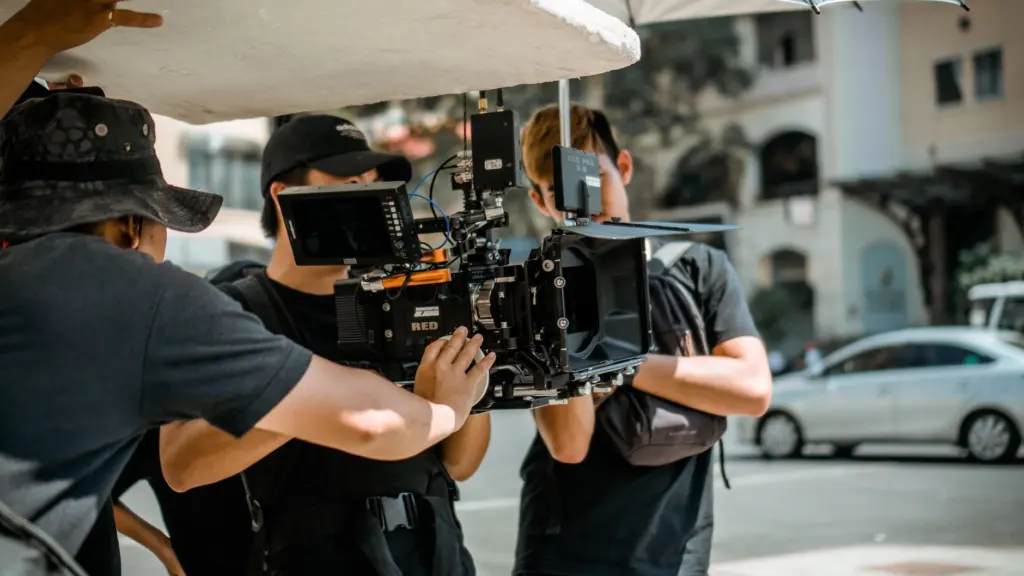
Production is the shoot, where the planned material is filmed. For corporate and brand work it typically takes one to three shoot days, according to the same studio guide. The stage is short, so what happens on those days depends on the schedule, crew and locations fixed beforehand. Crew size also follows project size: a cost-factors article notes that the bigger the project, the bigger the team required.
Post-production
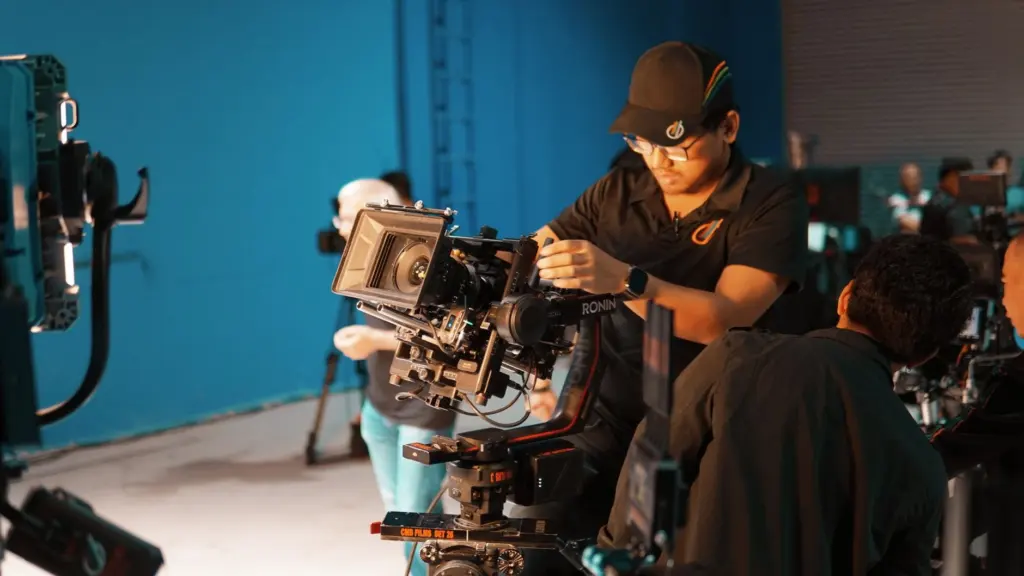
Post-production turns captured footage into the deliverable. The studio guide names editing, color grading, sound design, music, motion graphics and subtitles, and the production company overview describes the same work as footage edited and color corrected, sound mixed, and graphics or effects added. Plan two to four weeks depending on feedback rounds and graphics, according to the studio guide.
Length matters here too. Some films need more time on set and more time clipping and editing in post-production, as the cost-factors article explains, so a longer runtime stretches both the shoot and the edit. Backdrop replacement is one common finishing task that belongs in this stage, and How To Remove Green Screen From Video: A Simple 2026 Guide For Fast, Clean Results walks through it.
Budgeting for video production
No single price fits the term, because the cost depends on the shape of the project. A production company’s breakdown names the main factors that decide what a video costs:
- Type of video. Settle the format first, since every other factor is judged against it.
- Duration. Longer films need more time on set and more clipping and editing in post-production.
- Crew size. The bigger the project, the bigger the team required, and the higher the cost.
- Number of subjects and locations. Both are listed among the main drivers, and both are decided during casting and location work in pre-production.
- Equipment. Its cost is tied to a standard production company fee.
- Post-production work. Editing, grading, sound and graphics all sit on the edit side of the bill.
The same source says pre-production has as much impact on the cost of a video as post-production, if not more. The practical consequence is to settle the concept, script and locations before crew are booked, because changes made later are changes to a plan that others are already staffed around.
Choosing where to hold the budget down
A realistic budget starts from the factors a buyer can actually limit. A short video with few subjects, a single location and a small crew sits at the lower-cost end of the range. A long film with many subjects and several locations pushes up crew, shoot time and editing at once. Choose the factor you can give up, such as runtime or the number of locations, before trimming preparation or the edit, since neither can be skipped without showing in the result.

When you compare studios, ask each to show how its quote divides across planning, shooting and editing, so the bids describe the same scope. If you are still deciding who should make the video, How To Choose The Right Corporate Video Production Company: A Practical Guide For 2026 covers that decision.
Frequently asked questions
| Question | Answer |
|---|---|
| Does anything get filmed during pre-production? | No. Pre-production involves no recording; it is the preparation stage where the idea, script, cast and crew are chosen, as an overview of the process explains. |
| How long does a corporate or brand video take? | Plan four to eight weeks from kickoff to final files, according to a production studio’s guide. |
| Is equipment billed separately from the production fee? | Equipment cost is tied to a standard production company fee, so ask a studio what its standard fee covers, as this cost-factors article indicates. |
| Who manages the budget on a video project? | The producer, who owns budget, schedule and logistics, according to the same studio guide. |