An editor trims an interview and the picture jumps. The B-roll definition solves that: B-roll is supplemental footage that accompanies the primary shot, covering cuts and illustrating the story, while the video stays understandable without it.
Treat it as one line in your wider video production checklist. The misunderstandings below explain what to plan, and the shot list at the end turns the definition into something you can shoot from.
B-roll in plain terms
B-roll is supplemental or alternative footage, according to Boords. Podcast Videos puts it as any footage that is not the primary shot, which is often called A-roll. No Film School describes the same material as supplemental shots that are secondary to principal photography. The easiest way to hold the idea is Boords’ framing: A-roll tells and B-roll shows.
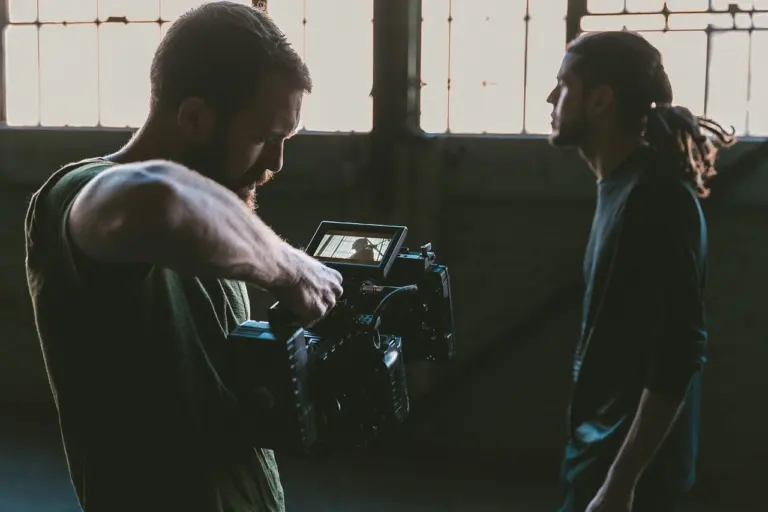
In an interview that split is easy to see. The A-roll is the person speaking, and Boords notes that filming an interview means pointing a camera at an often stationary person. The B-roll is whatever the viewer watches when the edit leaves that face. A speaker’s words carry the central narrative, so decide what each topic should look like before you worry about how it should sound.
| Question | A-roll (primary footage) | B-roll (supplemental footage) | Planning use |
|---|---|---|---|
| Job on screen | Tells; removing it may remove the central narrative | Shows or illustrates what is being told | Settle the telling first, then list what needs showing. |
| Can it stand alone? | A project can be produced from A-roll alone | The video should generally remain understandable if it is removed | Shoot the A-roll first. B-roll improves the edit but should not be the only place a point is made. |
| Typical content in an interview | An often stationary person speaking to camera | Archival footage, related images or explanatory animations | Plan a visual for each topic the speaker raises. |
The contrasts above draw on Boords and Podcast Videos.
Common misconceptions about B-roll
Most B-roll mistakes start from a wrong picture of what it is for. Four assumptions come up repeatedly, and each one changes how you plan a shoot.
“B-roll is just filler”
It is optional only in the narrow sense that a video should generally stay understandable without it. In practice it does real work. No Film School lists insert shots, establishing shots and transitions between segments as uses. It also gives a rescue case: you are filming an interview or a talking head, a line is flubbed, and you cut away to other footage before returning to the subject. Because B-roll can repair edit problems you only discover later, shoot it even when the script feels complete.
“You have to shoot all of it yourself”
You do not. No Film School notes that B-roll may be shot by another unit or come from stock. Epidemic Sound adds that it can come from the same session, a separate crew, archival material or stock footage. It also says stock or archival footage can work well for non-fiction such as documentaries. That makes borrowed footage most useful when the subject is something you cannot film on the day.
“B-roll needs its own audio”
Epidemic Sound says B-roll is generally shot without sound, with the audio coming from the main footage. That is a convenience, not a rule against recording sound. It does mean the interview or narration can keep playing while the picture changes, so you can concentrate on image quality.
“A-roll is the official counterpart term”
A-roll is still widely used, and both Boords and Podcast Videos rely on it. Epidemic Sound points out, however, that the term has fallen out of fashion, and that the counterpart of B-roll is better described as principal photography, the main event. Use whichever label your team understands, and keep the underlying distinction between the main footage and its support.
Shot types and what each does
Each B-roll shot should answer a question the main footage leaves open: where are we, what exactly is happening, or what is being discussed. These are the types worth knowing.
- Establishing shots: Wide frames that show the subject matter and setting. No Film School names them as one of the main things B-roll creates, and they work well at the start of a segment.
- Tight and insert shots: Close frames that show what is happening in greater detail. Epidemic Sound says close-up inserts can lend B-roll a certain weight by drawing attention to a topic or theme.
- Cutaways: Boords defines a cutaway as putting the focus on anything other than the major action in a scene, such as a detail or another subject. In an interview edit, a cutaway lets you leave the speaker without a visible jump forward or backward.
- Transition shots: Footage that bridges segments, so the edit moves from one idea to the next without a hard break.
Some scenes build their backdrop digitally instead of shooting it on location, and the history of that technique is covered in When Was Green Screen Invented? A Brief History From Matte Paintings To Digital Chroma Key (2026).
Shooting B-roll that edits well
Good B-roll is planned, varied and shot with enough room for the editor to work. Boords advises allowing time for it in pre-production, because B-roll squeezed in at the end of a shoot day tends to look like an afterthought.
Boords also suggests building the shot list around your main footage, then expanding with intros, exits, ambiance and atmosphere. Starting from the A-roll keeps the coverage tied to the story, and the expansion gives the edit places to breathe. Epidemic Sound recommends experimenting with different camera shots, locations and shot lengths, and keeping the camera rolling if you have the means, since continuous recording can capture usable moments you did not plan for.
Camera choices
The supported camera advice concerns creative controls rather than fixed numbers, so test each one on location instead of copying a preset.
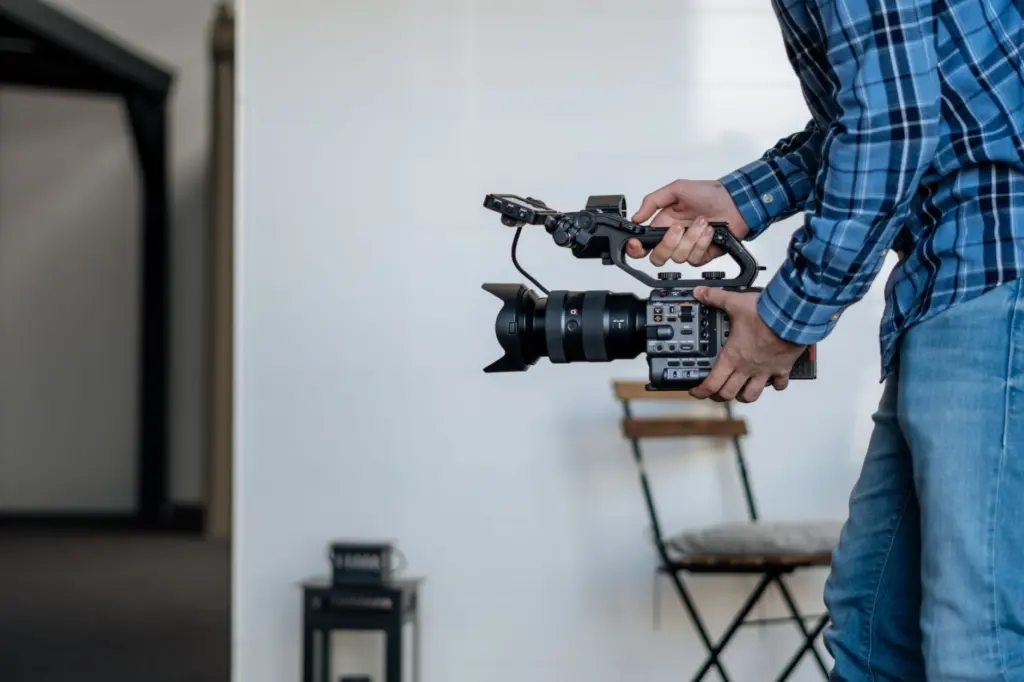
- Camera height: No Film School’s tutorial presenter singles out shooting at eye level as something to avoid. Try a lower or higher position so the shot looks different from the interview framing.
- Focus and depth of field: The same tutorial encourages playing with both. A tight, shallow frame isolates a detail, while keeping more of the scene sharp suits a wide frame showing the setting.
- Motion: If you have a dolly or slider, No Film School says it can bring energy into a shot. A locked-off frame is the simpler choice when the subject itself is moving.
A ready-to-use B-roll shot list for an interview
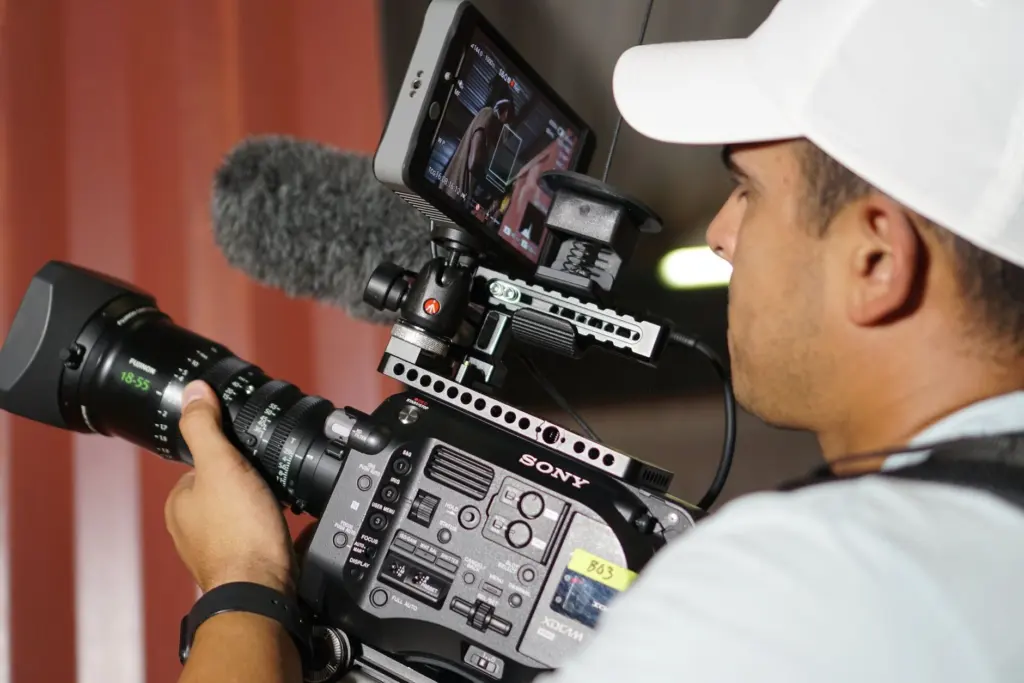
An interview puts a camera on an often stationary person, so the B-roll supplies the variety. Build the list around the interview itself, then work through these shots.
- Wide of the setting: Shows the subject matter and setting, as No Film School’s wide step describes. It gives the edit a way in and out of the conversation.
- Tight detail shots: Show what is happening in greater detail. Choose details tied to what the speaker is discussing.
- Close-ups of the interviewee: Boords observes that documentary shoots accumulate undirected footage such as close-ups of interviewees, exterior shots on location and preparatory meetings. Capturing these deliberately is better than hoping they happen.
- Exterior location shots: Give context for where the interview takes place and double as opening or closing frames.
- Visuals for topics mentioned: Boords lists archival footage, related images and explanatory animations as ways B-roll illustrates a subject. Note each topic the speaker raises and match it with a visual.
- Intros, exits, ambiance and atmosphere: The additions Boords suggests after the main footage is covered, so segments can open and close cleanly.
- A cutaway for the flubbed line: Keep one detail shot ready so a stumbled sentence can be covered and the edit returns to the subject, as No Film School describes.
Shoot the interview’s A-roll first, work down the list while the location is set up, and keep recording through natural pauses in case a usable frame appears.
Documentary projects benefit most from settling this list before the shoot day, and the guide on how to plan a documentary puts that planning in the wider context of the whole film.
Frequently asked questions
| Question | Answer |
|---|---|
| Is B-roll always video? | No. Epidemic Sound describes B-roll as video or still-image content that complements your core footage, so photographs can serve the same purpose. |
| Is a cutaway the same as B-roll? | Not exactly. A cutaway is a shot that focuses on something other than the main action in a scene, such as a detail or another subject. It is one common way B-roll is used. |
| Where does the term B-roll come from? | Epidemic Sound traces it to early twentieth-century film editing. Boords explains that odd-numbered shots were assembled on the A-roll and even-numbered shots on the B-roll. |