Cartoon art styles vary widely and shape how artists tell visual stories. This guide lists types of cartoon art styles and shows clear examples. It helps artists identify traits, pick influences, and try new approaches. The article uses simple terms and direct advice for artists at any level.
Key Takeaways
- Types of cartoon art styles are defined by elements like line weight, shape language, color, proportion, and expression, which shape visual storytelling.
- Classic Western cartoon styles evolved from rubber hose animation to modern geometric and rounded forms, reflecting changing production needs and technologies.
- Anime and manga styles emphasize expressive eyes, varied line weight, and emotional clarity, often influencing Western cartoons through stylistic blending.
- Cartoon realism and semi-realism balance exaggerated shapes with believable anatomy, lighting, and shading to enhance character depth without losing clarity.
- Artists can develop unique cartoon art styles by studying various types, practicing master techniques, mixing elements consistently, and creating style guides for cohesion.
What Makes A Cartoon Art Style Distinct? Key Elements To Recognize
Cartoon art styles differ by line, shape, color, and motion. Line weight defines energy. Shape language sets mood. Color choice sets tone and focus. Proportion controls character personality. Gesture and pose suggest movement and intent. Texture and detail set realism levels. Expression work shows emotion fast. Background style gives scene context. Repeating these elements creates a consistent style. When an artist studies types of cartoon art styles, they learn to spot these repeating choices and copy or adapt them.
To evaluate a style, break it down into observable rules: how are heads and hands proportioned, what is the typical line thickness, which palette hues dominate, and how is perspective handled? Note how motion is suggested—do characters squash and stretch, or is movement implied through pose and trailing lines? Also pay attention to how details are prioritized: are fabrics simplified into blocks of color or rendered with texture and folds? These rule-sets are what distinguish one approach from another and are the practical tools artists use to reproduce or combine types of cartoon art styles effectively.
Quick exercises: redesign the same character in three different styles, limiting yourself to a single rule change each time (for example, only change proportions, then only change line work, then only change color palette). This isolates the contribution of each element and trains you to recognize the signature features of a style.
Classic Western Cartoon Styles: From Rubber Hose To Modern Toon
Early Western cartoons used rubber hose limbs and simple faces. Animators used bendy shapes for clear motion. Later, studios moved to more structured designs with strong silhouettes. The Golden Age added exaggerated expressions and bold outlines. Television animation simplified shapes for fast production. Modern Western toons vary from blocky, geometric forms to soft, rounded figures. Color palettes also changed from limited to full, saturated ranges. Each era shows a production need. Artists who study types of cartoon art styles see how budget and tech shape design. They copy key details like eye shapes, mouth timing, and stylized anatomy to match a classic look.
Digging deeper, you can chart the evolution by looking at specific character design strategies: silhouette emphasis in theatrical shorts (so characters read at small sizes), limited animation shortcuts in TV (reusing arms, mouths, and cyclical motions), and iconographic simplification in modern designer toons (clear, repeatable shapes that read as logos). Pay attention to how comedic timing and exaggeration are built into the design—rubber hose favors elastic motion, while later styles use sharp anticipation and snap poses for punchlines.
Practice suggestion: take one character and create a “timeline” sheet showing how they’d look as a rubber hose character, a Golden Age design, a limited-animation TV model, and a contemporary geometric toon. Annotate each variant with the production or storytelling rationale (e.g., “simplified mouth shapes for cheaper lip-sync”). This reinforces how the history of Western cartoons feeds into present options when choosing from types of cartoon art styles.
Anime And Manga Influences: Stylization, Emotion, And Line Work
Anime and manga focus on expressive eyes and controlled line work. Artists simplify faces while refining hair and clothing detail. They use varied line weight to guide the eye. Panel layout and camera framing shape pacing. Emotion reads through strong mouth shapes and eye changes. Backgrounds range from sparse to highly detailed to set mood. Color choices often highlight a single emotional tone per scene. Many artists mix Western cartoon traits with anime traits. When artists explore types of cartoon art styles, they often borrow anime timing and expression to increase emotional clarity.
Within anime and manga, there are many sub-styles: chibi or super-deformed for extreme cuteness, shonen action styles with dynamic foreshortening and speed lines, shojo approaches that emphasize delicate line work and floral or sparkle motifs, and seinen styles that push toward realism with textured rendering. Each sub-style relies on a different balance of simplification and detail, especially in eyes, hair, and clothing folds. Observing how these parts are treated helps artists pick which anime or manga conventions suit their goals.
Technical tips: study how line weight changes between foreground characters and background elements to create depth; analyze how highlights are placed in hair to imply volume; and practice translating emotion frames—redraw the same emotional beat in multiple anime sub-styles to see how line and shape choices change the feeling. These exercises make it easier to blend anime influences into broader explorations of types of cartoon art styles without losing coherence.
Cartoon Realism And Semi-Realism: Balancing Believability And Exaggeration
Cartoon realism keeps clear shapes but adds believable anatomy. Semi-realism keeps simplified features but uses real-world lighting and texture. Artists preserve readable silhouettes while increasing detail. They use anatomy rules to make poses feel grounded. They adjust proportions to keep characters cute or heroic. Shading moves from flat color to subtle gradients. Line work may thin or vanish in shadow to mimic real light. This approach works well for concept art and stylized portraits. Many creators study types of cartoon art styles to decide how much realism to add without losing character clarity.
Key practical choices include how strictly to follow anatomical landmarks (should the clavicle or ribs be hinted at?), how to treat fabric (patterned vs. painted detail), and how to integrate realistic lighting with stylized color choices. Semi-realism often benefits from observational studies—life drawing, fabric studies, and lighting exercises—combined with deliberate simplification rules so the piece remains readable at smaller sizes.
Exercise: render the same character in flat cartoon, semi-realistic, and full cartoon realism versions, keeping the pose identical. Compare where you retain simplification and where you introduce detail. Create a short checklist of limits (maximum number of color values for skin, allowed texture types, line-weight range) to keep the semi-real result consistent. These limits are how artists codify where on the spectrum of types of cartoon art styles they want to position a project.
How To Choose, Mix, And Develop Your Own Cartoon Style
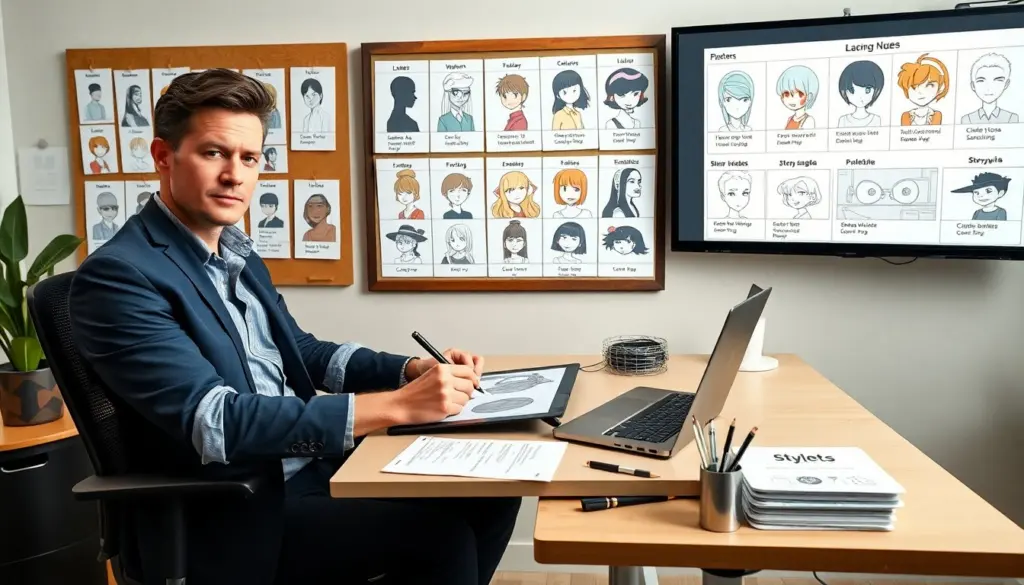
An artist should study many types of cartoon art styles before choosing a direction. They should copy master works for practice and then change one rule at a time. They should test line treatments, color limits, and shape languages. They should set small projects with fixed rules to force decisions. They should keep a visual reference board and note what feels right. They should ask peers for blunt feedback and revise quickly. Mixing styles works when the artist keeps consistent rules across a piece. For example, they can use anime eyes with Western body shapes and a semi-real background if they keep line weight and color rules steady. The artist should make a short style guide for each project. The guide should list palette, line tools, proportion rules, and common poses. This practice speeds production and keeps work cohesive.
Start small: pick three reference pieces from different types of cartoon art styles and list five clear rules from each (for instance: “thick outer contour, limited palette of 4 colors, exaggerated hip-to-waist ratio”). Combine no more than two rules from each reference into a single character study, and iterate. Over time, patterns will emerge that feel authentic to you—those repeated choices become your signature.
Common pitfalls to avoid: copying inconsistently (mixing rules without reconciling them), over-detailing a stylistic element that should remain simple, and changing rules mid-project which leads to visual confusion. Maintain a living style sheet as you work: thumbnail silhouettes, color chips, brush settings, and a short list of do/don’t examples. This keeps experiments focused and helps you scale a style for longer projects, whether you’re designing characters for comics, animation, or illustration.