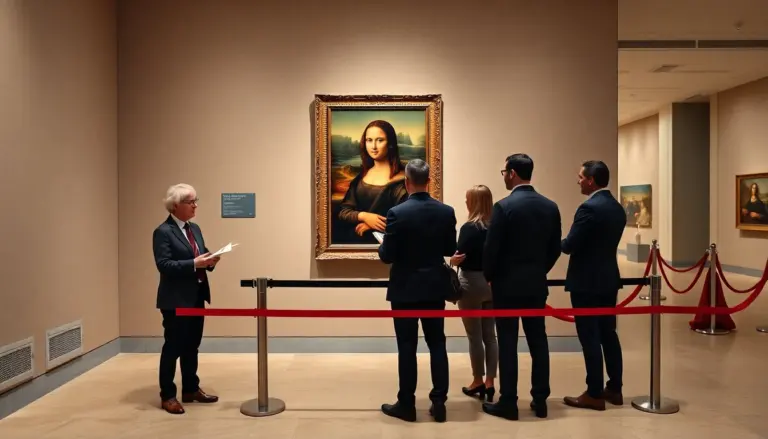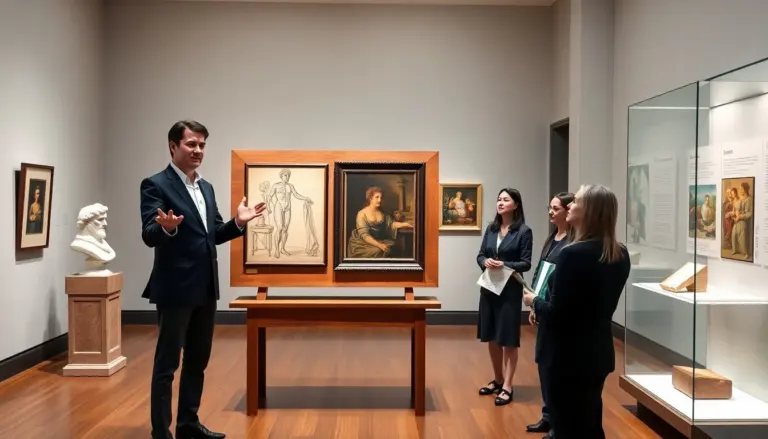
Styles of art appear across history and in modern practice. This guide names major styles of art and gives clear traits to spot for each style. It helps collectors, students, and casual viewers learn key visual signs. The guide uses plain examples and short tips. It aims to make recognition fast and reliable for anyone who studies or enjoys art.
Key Takeaways
- Art styles are defined by consistent visual elements such as color, line, form, and technique that group works with similar traits.
- Historical styles like Renaissance, Baroque, Neoclassicism, Romanticism, and Impressionism each feature distinctive approaches to composition, light, and subject matter.
- Modern and contemporary art styles, including Cubism, Pop Art, Minimalism, and Street Art, introduce new forms, perspectives, and social themes that break traditional boundaries.
- To identify an art style, observe edges, brushwork, subject choice, and surface texture as these reveal the artist’s technique and period influences.
- Collectors and viewers should study multiple examples, verify provenance, and consult experts to authenticate and accurately classify artworks by style.
- Using the primary keyword ‘styles of art’ provides a structured way to understand, appreciate, and categorize diverse artistic expressions throughout history and today.
What Defines An Art Style? Core Elements To Look For
An art style shows common visual choices across works. It uses color, line, form, subject, and technique in repeatable ways. Viewers should note palette choices. Viewers should note how artists handle light and shadow. Viewers should note brushwork, edge treatment, and texture. Viewers should note composition and rhythm. Viewers should note symbolic content and common themes.
A style forms when many artists share methods and aims. A style spreads by schools, patrons, and critics. A style survives when students copy and adapt its rules. A style changes when artists add new materials or ideas. Collectors and curators use these core elements to categorize works quickly.
Key Historical Styles Explained: Renaissance, Baroque, Neoclassicism, Romanticism, Impressionism
Renaissance art centers on proportion, balanced composition, and clear perspective. Artists used linear perspective and natural anatomy. Painters chose controlled light and measured space. Sculptors aimed for idealized human form. Architects returned to classical orders and symmetry.
Baroque art favors movement, strong contrasts, and dramatic compositions. Painters used intense light and dark to heighten emotion. Sculptors carved figures that twist and reach outward. Architects layered surfaces and used curves to create energy.
Neoclassicism returns to classical restraint and moral clarity. Artists used clean lines, sober palettes, and calm poses. They showed historical or mythic subjects meant to instruct. Neoclassical works often display clear foreground-background separation and minimal ornament.
Romanticism emphasizes emotion, individual vision, and dramatic nature. Painters used loose brushwork and bold color to convey mood. They often showed storms, ruins, and heroic figures. The style values feeling over formal rules.
Impressionism records light and momentary perception. Painters used broken brushstrokes and bright palettes. They sampled outdoor light and avoided detailed contour. The style treats scenes as visual impressions rather than exact copies.
Modern And Contemporary Styles: From Cubism To Street Art
Cubism breaks forms into geometric facets. Artists show multiple viewpoints on one surface. The style reduces depth and treats shape as construction. Modernists then explored abstraction. Abstract art removes clear subjects and highlights form, color, or gesture.
Expressionism distorts form and color for emotional impact. Artists exaggerate lines and hues to show inner states. Futurism celebrates motion and industrial energy. It uses repeated forms and diagonal lines to suggest speed.
Pop Art borrows imagery from mass media and commerce. Artists use flat colors, clear outlines, and repetition of icons. Minimalism strips art to basic forms and neutral surfaces. It removes narrative and focuses on scale, material, and geometry.
Conceptual art prioritizes ideas over aesthetic finish. It uses text, instruction, or found objects to convey meaning. Installation art arranges space and objects so viewers move through a designed environment.
Street art appears in public spaces and uses spray paint, wheatpaste, and stencil. It mixes bold graphics with social messages. Street art often adapts fast to local conditions. Contemporary artists blend digital media, performance, and traditional craft in hybrid forms.
How To Identify Style: Practical Tips For Viewing And Collecting
Look at edges first. Hard edges and clean lines suggest academic or modernist work. Soft edges and blended tones suggest older realist or romantic work. Check paint surface. Thick paint and visible strokes suggest an expressive hand or impressionist method. Smooth, thin paint with tight brushwork suggests academic or neoclassical practice.
Note subject choice. Religious or mythic scenes often link to classical or Renaissance work. Everyday scenes and leisure often link to impressionism or pop art. Urban walls and political slogans often signal street art.
Compare artist signatures and labels. Galleries and catalogs list medium and date. Provenance helps confirm style and period. Condition also affects appearance: restorations can change color and gloss.
For collecting, they should buy what they study first. They should view many examples in museums and auction records. They should learn key names in each movement and track how those names appear in scholarship. They should consult conservators for technical authentication when price or rarity demands proof.
When they view art, they should state what they observe, then link those observations to known style markers. They should avoid quick labels. They should rely on consistent traits across works before assigning a style.