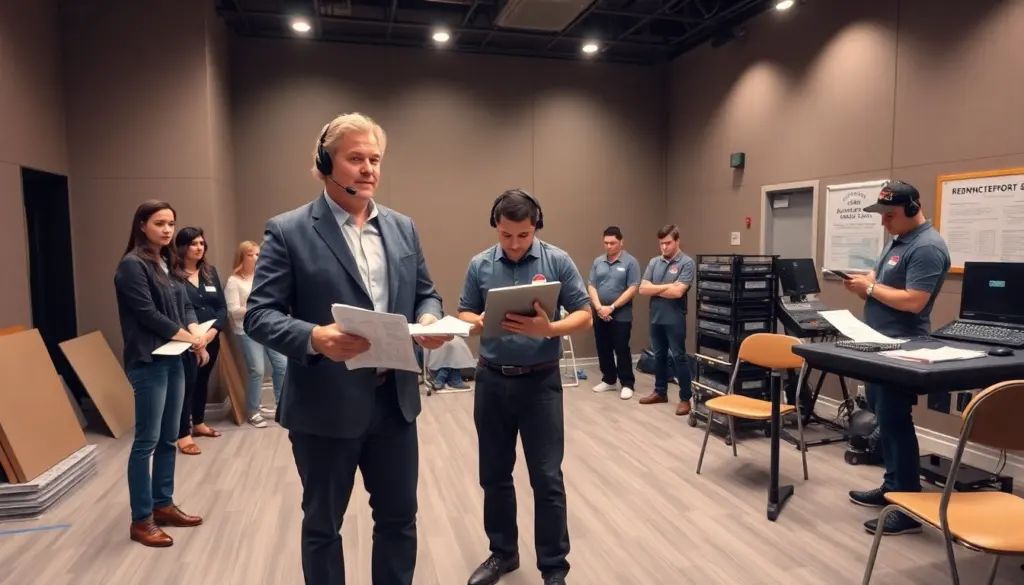
The stage manager in our town runs rehearsals, coordinates crews, and keeps shows on time. They track blocking, call cues, and record notes. They keep cast informed and crews ready. They handle problems and protect the schedule. This guide explains core duties, rehearsal work, performance-night actions, and practical tools for local productions. It also highlights common challenges for small companies, how to prepare volunteers, and concrete practices a stage manager can adopt to raise production quality across multiple shows in our community.
Key Takeaways
- The stage manager in our town is essential for running rehearsals smoothly, coordinating crews, and keeping productions on schedule.
- During rehearsals, the stage manager takes detailed notes, monitors pacing, and sends daily reports to keep the cast and crew informed.
- On performance nights, the stage manager leads backstage operations, manages technical cues, and ensures timely show starts.
- Effective use of tools like prompt books, checklists, and communication apps helps the stage manager organize local theater productions efficiently.
- The stage manager serves as the central communication point between directors, crew, and cast, maintaining order and resolving issues quickly.
The Role Of The Stage Manager In Community Theater
The stage manager in our town serves as the production backbone. They set the rehearsal tone and enforce schedules. They log props, track costumes, and maintain safety records. They communicate with directors, designers, and volunteers. They keep the prompt book and share updates. They manage the rehearsal room and handle small conflicts. They file reports after runs. They serve as the single point of contact on technical matters. They make sure the production runs predictably and the team stays informed.
In a community setting the stage manager also wears many hats beyond those found in larger houses: recruiting and training volunteers, creating accessible schedules for participants with outside jobs, and adapting plans to limited tech resources. Regular prep tasks include making a clear rehearsal calendar, coordinating rehearsal space logistics (keys, heating, seating), and preparing a continuity plan so understudies or swing crew members can step in quickly if needed. Clear, consistent communication — posted call boards, a rehearsal email or message thread, and an agreed-upon etiquette for late notices — reduces last-minute friction and protects everyone’s time.
What A Stage Manager Does During Rehearsals
The stage manager in our town arrives early and opens the rehearsal space. They set up chairs and equipment and mark the stage. They take detailed blocking notes and enter them into the prompt book. They time scenes and monitor pacing. They record line changes and prop needs. They send daily rehearsal reports to cast and crew. They run quick cue-to-cue checks when the director permits. They encourage focus and enforce call times. They keep morale steady and the schedule moving.
Concrete rehearsal practices that help a community production: run focused warm-ups, keep a strict but humane rehearsal clock, and use brief written agendas so actors know which scenes will be covered. The stage manager should preserve a single authoritative version of blocking and lines, track continuity (props, costume changes, set positions) and highlight any safety concerns immediately. Daily rehearsal reports should list what was achieved, outstanding problems, scheduled needs for the next session, and any mandatory attendance notes so volunteers and part-time participants can plan ahead.
Running The Show: Performance Night Duties
The stage manager in our town leads the backstage team on performance nights. They open the space, brief crews, and run the safety checks. They confirm all props and set pieces at call. They communicate with front-of-house and ensure timely curtain. They monitor cast readiness and handle last-minute needs. They keep the prompt book at hand and watch for technical issues. They coordinate scene shifts and maintain house rules. They stay calm and direct the crew through the full run.
On performance nights the stage manager’s checklist expands to include a pre-show run-through of critical cues, a final walk of the wings and backstage areas, and a briefing with wardrobe, props, and fly/sound/light operators. They rehearse emergency plans (medical, fire, evacuation) with an assigned point person and ensure contact info is accessible. During the show they manage a clear calling system for cues, keep a running log of any deviations, and debrief after each performance to record fixes or adjustments for subsequent performances. Maintaining consistent split-second timing and calm leadership is what keeps audience-facing standards high and volunteer teams engaged.
Tools, Templates, And Tips For Local Productions
The stage manager in our town uses simple, reliable tools. They keep a printed prompt book, a digital backup, and a headset system. They use checklists for props, costumes, and safety checks. They adopt a shared calendar and a group messaging app for alerts. They make standard forms for rehearsal reports and incident logs. They label storage and mark set pieces with tape. They train volunteers on one or two tasks. They save time with templates for daily notes and cue sheets.
Practical templates and tips to implement: create a reusable prompt book layout that includes scene breakdowns, prop lists, and cue lines; a one-page emergency contact and medical info sheet for cast and crew; standardized rehearsal-report templates that list attendance, notes, and action items; and simple cue sheets keyed to both timecode or line numbers depending on the production’s needs. Low-cost technology—shared cloud folders for documents, a group calendar, and a reliable two-way headset or hands-free headset app—can multiply a small team’s effectiveness. Finally, invest time early in volunteer orientation and concise signage backstage so first-time helpers can perform reliably under pressure.