The most famous painting in the world is the Mona Lisa. It hangs in the Louvre and it draws millions of visitors each year. Scholars trace the painting to Leonardo da Vinci around 1503–1506, with work continuing later. The painting keeps attention because of its technique, its history, and the stories that surround it. This article explains who painted the work, its historical journey, the technical reasons for its fame, why the smile still intrigues, and its cultural impact.
Key Takeaways
- The Mona Lisa, painted by Leonardo da Vinci between 1503 and 1506, is regarded as the most famous painting in the world.
- Its fame grew due to its mysterious smile, da Vinci’s sfumato technique, and its dramatic history including a high-profile theft in 1911.
- The painting has had significant cultural impact, appearing in popular media and attracting millions of visitors annually at the Louvre.
- The enigmatic smile of the Mona Lisa continues to intrigue viewers because of its subtle, shifting expression that invites ongoing study.
- The painting’s preservation and display strategies help manage the large crowds drawn by the world’s most famous painting, ensuring its legacy endures.
The Painting And Its Artist: Who Painted The Mona Lisa And When
Leonardo da Vinci painted the work that most people call the most famous painting in the world. He began the portrait around 1503 in Florence and returned to it intermittently over several years, applying delicate glazes and revising details. He worked on it in stages and kept it in his studio for years, treating it more as a laboratory for subtle optical effects than a straightforward commission. He used oil on a poplar panel and built up tone with many thin layers rather than broad, visible brushstrokes. Leonardo kept the painting when he moved to France in 1516 and brought it into the circle of royal patrons; King Francis I acquired it after Leonardo’s death in 1519. Experts date the major work to 1503–1506 but note that some small refinements and varnishing may have continued later. Most historians agree the sitter was Lisa Gherardini, a Florentine woman, although the painting’s identity and intended purpose have inspired long discussion among scholars and biographers.
Historical Journey And Notable Events That Built Its Fame
The painting became widely known after it joined the French royal collection and later moved to the Louvre during the upheavals of the French Revolution. Napoleon displayed it in his bedroom for a time, which added to its aura among Europe’s elite. Nineteenth-century writers and critics began to single out the Mona Lisa for praise, and the painting appeared in early art histories and exhibitions that broadened its audience. The 1911 theft was a turning point: Vincenzo Peruggia stole the work and kept it for two years in Italy before it resurfaced, and the international press coverage that followed transformed the painting into a household name. Subsequent exhibitions—temporary loans and high-profile showings in other countries—along with mass-produced reproductions in books, postcards and, later, photographic media, spread its image across the world in the twentieth century. Conservation work, scientific study, and the creation of security and display standards have also been part of the painting’s journey, making its biography a mix of art history, technology, and public spectacle.
What Makes The Mona Lisa So Famous? Technique, Mystery, And Media
Leonardo used sfumato to blur edges and create soft transitions between light and shadow; this technique, combined with meticulous glazing, gives the face a lifelike, almost three-dimensional presence. He layered thin glazes to build subtle tones and avoided hard outlines, which contributes to the sense that the expression changes with the viewer’s perspective and the light. The composition—half-length portrait, direct gaze, calm pose—helped establish a new approach to intimate portraiture in Renaissance painting. But technical mastery alone does not explain why the Mona Lisa is the most famous painting in the world. The painting’s dramatic history—its theft, acts of vandalism, and repeated reproduction—amplified public interest. Media attention in the twentieth century, including newspapers, magazines, and later television and online platforms, turned the image into a global icon. Artists and advertisers have repeatedly referenced, parodied, and reinterpreted the painting, embedding it within broader visual culture. Finally, scholarship and scientific analysis—infrared reflectography, x-ray imaging, and pigment studies—have kept the work in academic and curatorial conversation, creating layers of meaning that feed popular fascination.
The Smile: Why It Continues To Intrigue
Observers call the sitter’s expression enigmatic because the smile resists a single definition. From some angles it seems reserved; from others it appears fuller, and changes in ambient light can make the mouth read differently. Leonardo’s subtle modeling of muscles, the delicate rendering of the mouth and cheeks, and the soft, graduated shifts of tone contribute to this visual ambiguity. Psychological studies and perceptual experiments have used the Mona Lisa to explore how humans read faces and emotion, while art historians debate whether the smile conveys serenity, irony, melancholy, or a complex mixture. The expectation that a portrait should present a clear, fixed emotion collides with Leonardo’s intention to portray a living, expressive subject, and that tension—between expectation and perception—keeps viewers returning. The continued scholarly debate and popular speculation about the smile play a central part in why the painting remains the most famous painting in the world.
Cultural Impact, Tourism, And The Mona Lisa’s Enduring Legacy
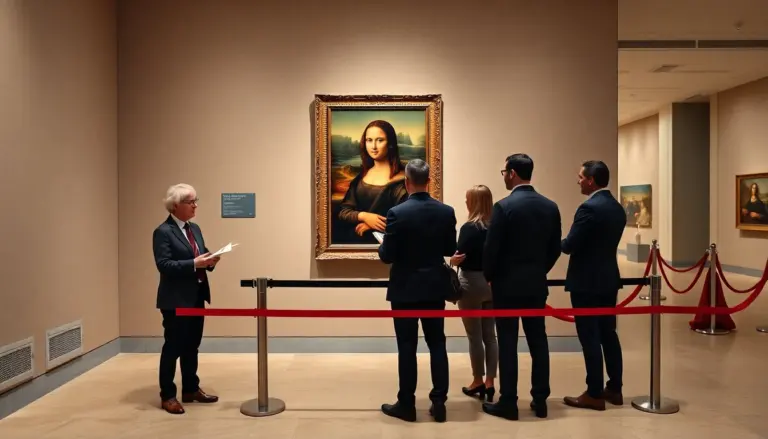
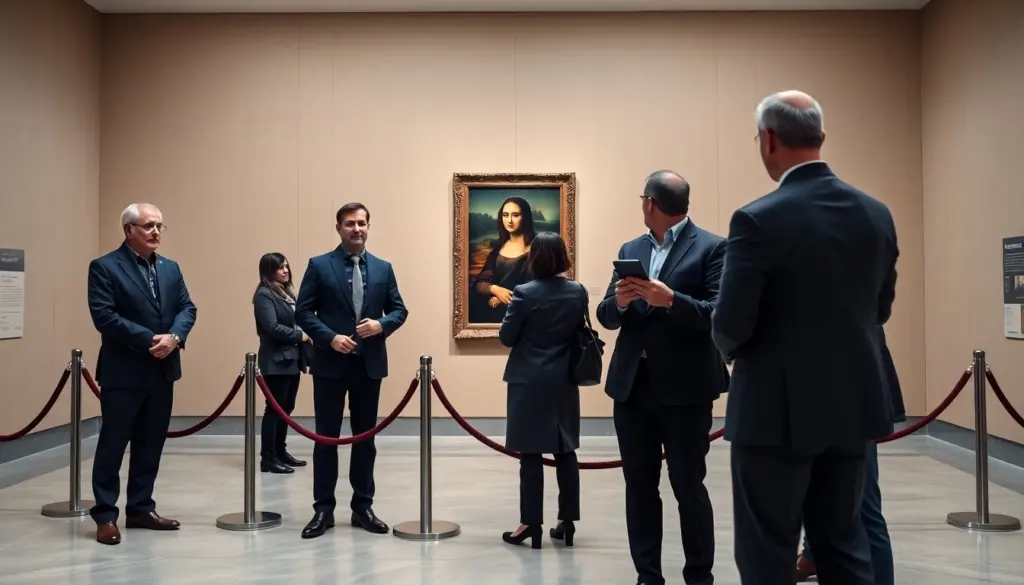
The Louvre displays the painting behind protective glass and behind a barrier to manage crowds and conservation concerns. Museum strategies for displaying the work—lighting, placement, protective glazing, and interpretive labels—reflect the challenge of showing an object that is both fragile and exceptionally famous. Millions of visitors see the work each year, many photographing and sharing images that perpetuate the painting’s global presence. The Mona Lisa appears in films, novels, cartoons, advertising, and museum education programs; it functions as shorthand for artistic genius and for the concept of the cultural masterpiece. Curators, conservators, and scholars continue to debate restoration, travel, and access policies because the painting’s fame creates unique pressures on institutions responsible for its care. At the same time, its enduring legacy is visible in the way the Mona Lisa shapes public ideas about portraiture, celebrity, and authenticity: it is simultaneously an object of serious study and a ubiquitous cultural emblem, which helps explain why it is consistently described as the most famous painting in the world.