Famous art painting captures attention and shapes culture. The term describes works that people study, debate, reproduce, and travel to see in museums and galleries. A single painting can teach viewers about historical events, visual techniques, materials and workshop practice, and shifting social meanings across time. This article outlines the reasons a painting becomes famous, describes key criteria that create and sustain fame, profiles seven landmark paintings with context about technique and impact, and offers practical advice for seeing and studying famous works today.
Key Takeaways
- A famous art painting endures by demonstrating technical skill, emotional clarity, narrative or conceptual depth, or innovation that continues to resonate across generations.
- Artist reputation, compositional or technical innovation, historical relevance, documented provenance, critical reception, and broad reproduction or media exposure all contribute to a painting’s fame.
- The Mona Lisa exemplifies a famous art painting through technical mastery (sfumato), an enigmatic expression, a compelling provenance story, and sustained presence in popular culture.
- Museums, curators, conservators, and scholars play crucial roles in preserving, researching, interpreting, and exhibiting famous art painting for public understanding.
- Viewers can deepen appreciation by preparing with context, practicing sustained looking, comparing reproductions to originals, and engaging with scholarship and conversation.
- Studying famous art painting reveals how technical processes, historical circumstances, reception histories, and changing values interact to make certain works central in cultural memory.
Why Famous Paintings Endure Across Centuries
Famous art painting endures when repeated layers of value accumulate around an image. The first layer is often the artwork itself: visible mastery of form, composition, color, light, or a formally innovative approach that other artists can learn from. A second layer comes from social and historical relevance—the work may respond to political events, religious practice, or cultural change in ways that viewers continue to find meaningful. A third layer is institutional: collectors, museums, and patrons preserve and display a work, making it accessible to new audiences. A fourth layer is narrative: anecdotes, controversies, thefts, exhibitions, and critical writing build a public story that amplifies interest. Over time these elements reinforce one another: conservation keeps the painting intact, scholarship interprets it for successive generations, exhibitions and reproductions circulate its image, and popular culture references embed it in collective memory. That combination allows some paintings to function as touchstones across disciplines—art history, literature, film, and visual culture—and to remain visible long after their creation.
Endurance also depends on change: a painting that can be read in multiple ways across periods—politically, formally, psychologically—remains ripe for reinterpretation. Technical features such as innovative use of pigment, glazing, or compositional invention invite repeated study, while a strong provenance and documented exhibition history help secure a place in museum narratives and catalogues raisonnés. Finally, public rituals—annual displays, national exhibitions, or popular reproductions—keep certain images alive in everyday life, ensuring that a famous painting continues to shape how people think about art and history.
What Makes A Painting ‘Famous’ — Key Criteria
Fame rarely rests on a single cause. Instead, several interlocking criteria typically influence whether a work enters broad recognition:
- Artist reputation: Works by widely recognized artists benefit from scholarly attention and institutional prioritization; however, lesser-known artists can also achieve celebrity when a particular work exemplifies a breakthrough.
- Technical or formal innovation: New handling of paint, radical composition, or an original approach to perspective or space can make a painting a reference point for later artists.
- Subject matter and cultural relevance: Portraits of notable figures, depictions of pivotal events, or themes that resonate with societal concerns tend to attract wider interest.
- Provenance and exhibition history: Early inclusion in important collections, loan histories, and high-profile exhibitions increase visibility and scholarly treatment.
- Critical reception and writing: Endorsements, essays, and inclusion in textbooks help canonize works by providing interpretive frameworks.
- Reproduction and media exposure: Prints, posters, photography, film, and digital circulation spread an image beyond the museum, creating a visual presence in daily life.
- Controversy or dramatic events: Thefts, scandals, legal disputes, or record-breaking sales can thrust a painting into headlines and the popular imagination.
- Physical survival and conservation: A painting that has been well-preserved, or successfully conserved after damage, remains available for study and display.
When several of these factors align, a painting is more likely to enter museum narratives, curricula, and popular culture, becoming a widely recognized example of “famous art painting.”
Seven Iconic Paintings To Know (Overview And Context)
The following entries summarize seven landmark works often discussed as famous art painting. Each entry explains why the painting became central to art history, highlights distinguishing techniques or themes, and outlines the wider cultural impact that helped secure its fame. The list mixes early modern and modern works to show how different moments produced enduring images.
Mona Lisa — Innovation, Mystery, And Cultural Impact
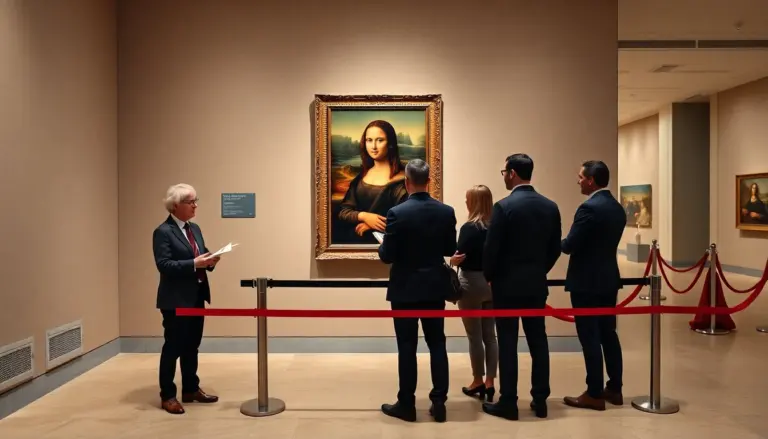
Leonardo da Vinci’s Mona Lisa exemplifies how technical subtlety, enigmatic expression, and a compelling history combine to make a painting famous. Executed in the early 16th century, the work is celebrated for Leonardo’s use of sfumato—delicate gradations of tone that produce a soft, lifelike modeling of face and hands—and for the sitter’s ambiguous expression, which invites prolonged looking. Its renown grew through centuries of reproduction, scholarly attention, and a dramatic theft in 1911 that transformed the painting into an international symbol. Because teachers and museums use the Mona Lisa to illustrate portrait technique, composition, and the circulation of images, it remains central to discussions of what a famous art painting can reveal about technique, identity, and celebrity.
The Night Watch — Public Display, Group Portraiture, And Theatrical Composition
Rembrandt’s large-scale group portrait is famous for its dramatic handling of light, complex composition, and the sense of movement it gives to what might otherwise be a static civic portrait. Painted in the 17th century, its innovative use of chiaroscuro and the way figures engage the viewer influenced portrait painting and public ceremonial representation. Over time the painting’s conservation history, restorations, and prominent display in a national museum have reinforced its status as a canonical work of baroque civic art.
Las Meninas — Ambiguity, Mirror, And Courtly Complexity
Diego Velázquez’s Las Meninas is frequently studied as a famous art painting because of its intricate composition and self-reflexive treatment of seeing and representation. The scene places the artist and the royal family within the pictorial space, and a mirror in the background raises questions about perspective and spectatorship. Scholars have long debated its meaning, which has kept the painting central to conversations about authorship, illusionism, and courtly visual culture.
Girl with a Pearl Earring — Intimacy, Light, And the Power of the Gaze
Johannes Vermeer’s small-scale portrait has become emblematic of the quiet intensity a painted face can convey. Its fame rests on the luminous handling of light on skin and pearl, the immediacy of the sitter’s gaze, and the painting’s evocative simplicity. Popular interest grew in the 20th and 21st centuries through exhibitions and cultural adaptations that brought wider attention to a work that had long been prized in art-historical circles.
The Starry Night — Expression, Brushwork, And Modern Readings
Vincent van Gogh’s The Starry Night is known for expressive brushwork, intense color, and a rhythmic composition that conveys emotional and psychological presence. Painted during a period of personal crisis, the work became an icon of modern subjectivity and the expressive possibilities of paint. Reproductions, scholarship on van Gogh’s life, and its frequent appearance in popular culture have all contributed to its standing as a famous art painting that helps define modern notions of artistic genius and emotional expression.
Guernica — Political Message, Monumental Scale, And Collective Memory
Pablo Picasso’s Guernica is widely regarded as a famous art painting because it transforms a political atrocity into a universal emblem of suffering. Commissioned in the 20th century in response to wartime events, the work’s stark monochrome palette, anguished figures, and monumental scale turned it into a rallying image for anti-war sentiment and human-rights discourse. Its history of exhibition, repatriation politics, and continuing use in protest imagery illustrate how a painting can move beyond aesthetics into civic life.
The Scream — Anxiety, Reproduction, And Modern Myth
Edvard Munch’s The Scream represents modern anxieties through a simplified form and an expressive, almost graphic use of line and color. Its fame was amplified by multiple versions, high-profile thefts, and extensive reproduction, which helped transform the image into a modern icon of existential feeling. The painting’s ability to be read across psychological, cultural, and popular registers shows how a single image can come to signify broader emotional states.
Each of these works became famous for different combinations of innovation, subject matter, historical circumstance, and public circulation. Studying them comparatively reveals patterns in how technical choices, display practices, critical writing, and public events interact to create a famous art painting.
How To See, Study, And Appreciate Famous Paintings Today
Approaching a famous art painting thoughtfully will deepen both immediate aesthetic experience and long-term understanding. Prepare: read a short museum label, an introductory essay, or a reliable guide to the artist and period before visiting. That basic context clarifies date, materials, and subject, and helps you form questions to guide looking.
Look closely: spend sustained time with the painting rather than taking a single snapshot. Note technical features—brushwork, layering, evidence of pentimenti (changes made during the painting process), scale, and surface texture. Observe the composition: how are figures arranged, how does the artist lead your eye, and how does the picture use light and color?
Compare: when possible, compare reproductions, prints, and preparatory sketches with the original. Differences in color, scale, and detail between reproduction and painting are instructive about materiality and the limits of photographic images. For students and artists, copying small sections in a sketchbook or making tonal studies can illuminate technique and decision-making.
Read and research: consult a museum catalogue entry, conservation report, or recent scholarly essay to learn about dates, patronage, restoration history, and critical debates. Catalogues raisonnés and exhibition catalogues provide deeper technical and provenance information if you want advanced study.
Contextualize: situate the painting within the artist’s oeuvre, the political and social circumstances of its creation, and subsequent reception histories. That contextualization explains why a painting became famous and how its meanings have shifted over time.
Discuss and reflect: engage with docents, curators, classmates, or fellow visitors to compare interpretations. Public programming—lectures, gallery talks, and digital resources—often surfaces new perspectives and research findings. Finally, allow your own response to evolve: a famous art painting has often been meaningful to many different viewers across time, and your personal encounter is another link in that continuing history.