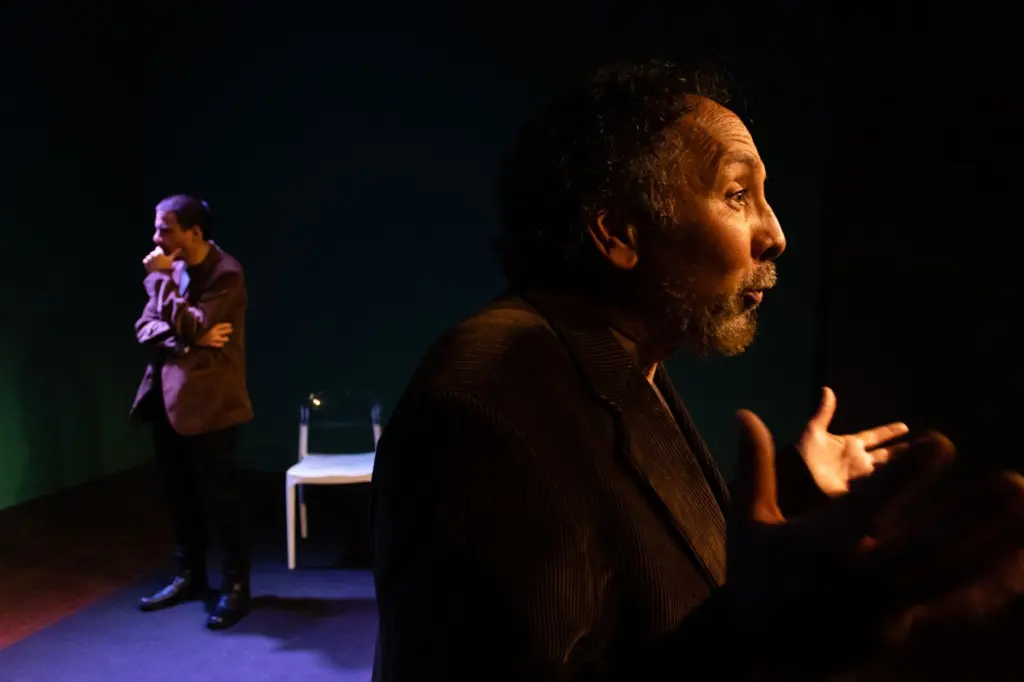
| Form | Who the speech is aimed at | What it does | Planning use |
|---|---|---|---|
| Dramatic monologue | A speech directed toward another character or the audience | A single character delivers a speech that reveals thoughts and emotions, distinct from the poet’s voice | Choose it when you want a character to expose themselves while talking to someone. Decide who that listener is before you start. |
| Monologue (general) | The character can address themself, another character or the audience | A long speech by a single character in a play or film | Use it as the umbrella term when matching a piece to a brief. Check who is addressed before judging fit. |
| Soliloquy | Not meant to be heard by other characters; usually spoken when alone | The character speaks their thoughts out loud | Play it as private thinking, not as persuasion of a listener. |
| Aside | Shares components with the dramatic monologue and invites the audience into the speaker’s confidence | Works as a device that brings the audience close to the speaker | Treat it as a confidence shared with the audience, not as a full speech to build a performance around. |
The distinctions above draw on the literary reference entry for dramatic monologue at EBSCO Research Starters and the drama-education definitions at StudioBinder.
The dramatic monologue definition comes down to this: one character speaks to an unseen listener, and the speech reveals that character’s thoughts and emotions. The essential condition is that the voice belongs to the character, not the poet.
If you are placing a solo speech inside a larger show, how to produce a community theater show covers the wider production picture.
What the form means for actors and writers
Because the speaker is a character and not the author, the form asks you to commit to a point of view that may not be your own. That shapes several practical decisions.
- Name the listener. A dramatic monologue is directed toward another character or the audience, so the performance changes depending on who you imagine in front of you. A speech aimed at a person on stage plays differently from one aimed at the house.
- Let the speech expose the speaker. The form invites the audience to engage with the character’s views, so the speaker does not need to announce who they are. What they choose to say does that work.
- Separate the speaker from yourself. The voice of the text is not the voice of the poet, and the same logic helps an actor. Build the character’s attitude from the words, then deliver it as theirs.
- Check the form before you commit. If the speech is meant to be overheard by no one, it is a soliloquy and calls for a different kind of honesty. If it is a speech to someone, treat it as a dramatic monologue.
These consequences follow from how the form was defined, which is worth understanding before you start rehearsing.
Definition and origins
The Cambridge Dictionary defines a dramatic monologue as a poem written as if someone is speaking to an unseen listener about important events or thoughts. EBSCO’s literary reference describes it as a Victorian literary form in which a single character delivers a speech that reveals their thoughts and emotions.
Where the term comes from
EBSCO says the first recorded use of the term was probably made by poet George W. Thornbury. It names Robert Browning as the key contributor to shaping the form, and the Cambridge Dictionary’s usage example credits Browning with creating a new poetic form. That poetic origin matters for performers: the stage version borrows its central idea, a speaker who gives themselves away through what they say, from the poem.
The speaker is not the poet
EBSCO stresses that the voice of the text is distinct from the voice of the poet. The reader or audience has to judge the speaker as a character. For an actor, that is permission to play someone whose views you do not share, and a reason to look for what the speaker reveals without meaning to.
Dramatic monologue, soliloquy and aside compared
EBSCO notes that the soliloquy, monologue, aside and dramatic verse all share components with the dramatic monologue, and that these devices all invite the audience into the speaker’s confidence. The differences lie in who is meant to hear the speech.
StudioBinder describes a soliloquy as a character speaking their thoughts out loud, usually when alone on stage or screen, and says soliloquies are not meant to be heard by other characters. A dramatic monologue, by contrast, is a speech directed toward another character or the audience. A general monologue is a long speech by a single character in a play or film, and the character can address themself, another character or the audience.
In practice, treat the soliloquy as the most private of these. StudioBinder’s Hamlet example makes the point: because he is alone, the audience understands the speech as his most honest, unfiltered reflection. A dramatic monologue works differently, because the speaker is shaping what they say for a listener, so the audience reads the gap between the speaker’s aim and what actually comes out.
Examples in drama and film
Hamlet’s speech is the standard stage soliloquy, valued because the audience hears a character thinking when no one else is there. For a monologue directed at another person, StudioBinder points to Sean’s speech in Good Will Hunting, delivered by Robin Williams, which causes Will to finally be open. That speech works because it is aimed at a particular listener and changes what happens next.
Browning’s poetry is where the dramatic monologue was shaped as a form, so his work is the reference point when a teacher or director uses the term strictly. For theatre auditions, the film and stage examples above show the performable version: a speaker with a clear listener and something to gain from speaking.
Performing a dramatic monologue
Performance starts with the same questions a reader asks: who is speaking, who is being addressed, and what does the speaker want from them? The sources support the framing, not a fixed method, so treat the steps below as practical judgement built on those facts.
- Fix the addressee first. Because the speech is directed toward another character or the audience, decide where that person is and how they are reacting in your imagination. Keep that focus steady through the speech.
- Play the character’s aim, not the poet’s. The voice belongs to the speaker, so let their wants drive the delivery rather than your own opinion of them.
- Let the audience judge. The form invites the audience to engage with the character’s views. You do not have to signal whether the speaker is right.
- Match the piece to the room. If an audition asks for a speech aimed at another character, pick a dramatic monologue. If it allows direct address, an audience-facing piece can work.

For audition pieces written for female performers, Monologue for Women: How To Choose, Prepare, And Perform Powerful Female Monologues (2026 Guide) goes deeper on choosing and preparing a speech. If you are running the rehearsal room around a solo piece, What Does a Stage Manager Do? The Practical Guide To Their Role In Theatre (2026) explains how that role supports the process. More guides sit under Theater.

Frequently asked questions
Who is credited with creating the dramatic monologue?
Robert Browning is the poet most associated with the form’s development, and reference works credit him with its shaping.
When was the term first used?
EBSCO says the first recorded use was probably in 1857, by the poet George W. Thornbury.
Is the speaker the same as the poet or performer?
No. The voice of the text is distinct from the poet’s voice, and the speaker is a character the audience is invited to engage with.
Can the speaker talk to the audience?
Yes. StudioBinder describes a dramatic monologue as a speech directed toward another character or the audience, so the addressee can be either.